- Home
- Company
- Services
- Features
- Sign-up
- Pricing
- Resources
- Tools
- Contact Us
Website Monitoring has become a full-fledged industry, giving website owners a myriad of choices, from monitoring software, to subscription services to live monitoring. There are "inside jobs" and there are global agents. There are do-it-yourself systems and there are experts waiting to serve you. There are web hosting companies that monitor for their clients and there are free agents. What kind of website performance monitoring service do you want?
What follows are ten things you should look for when choosing a website monitoring service. One size does not fit all, and your options vary as much as the variety of cars on the road. You will sleep a lot better at night knowing that you have the right monitoring service for your business needs.
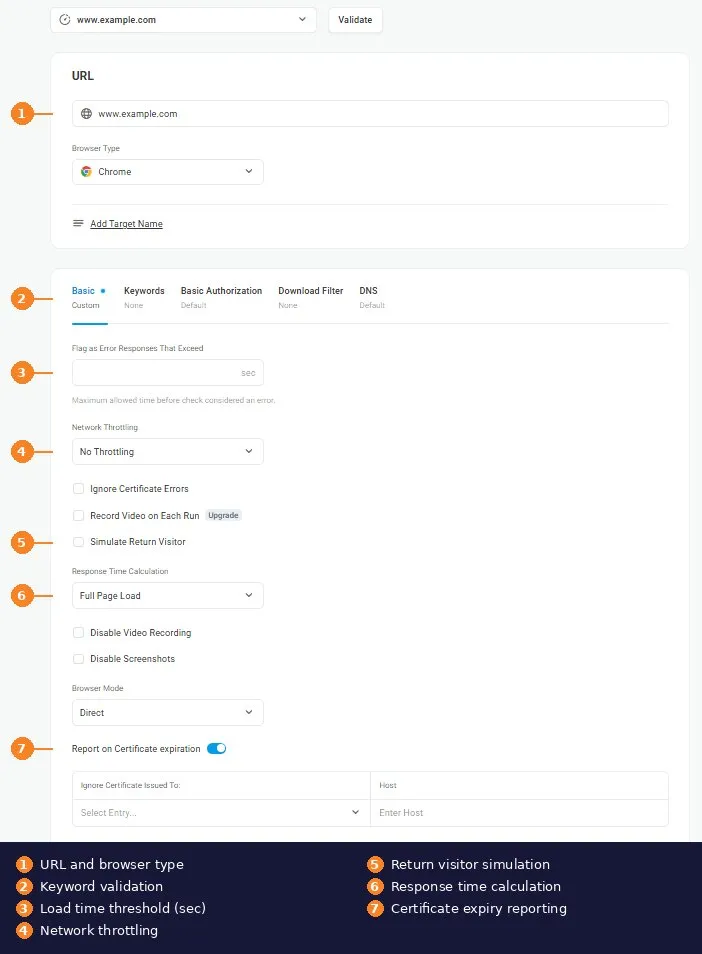
Many website monitoring companies and software options offer simple connectivity tests. They might test connections using a simple "ping" or by checking if your website's connection opens an HTTP port. In today's business environment, this is like choosing a new car by just kicking the tires. As web applications become more and more complex, you need to verify more then just connectivity. A good website monitoring service will read your server response, analyze the content for errors, and check website performance.
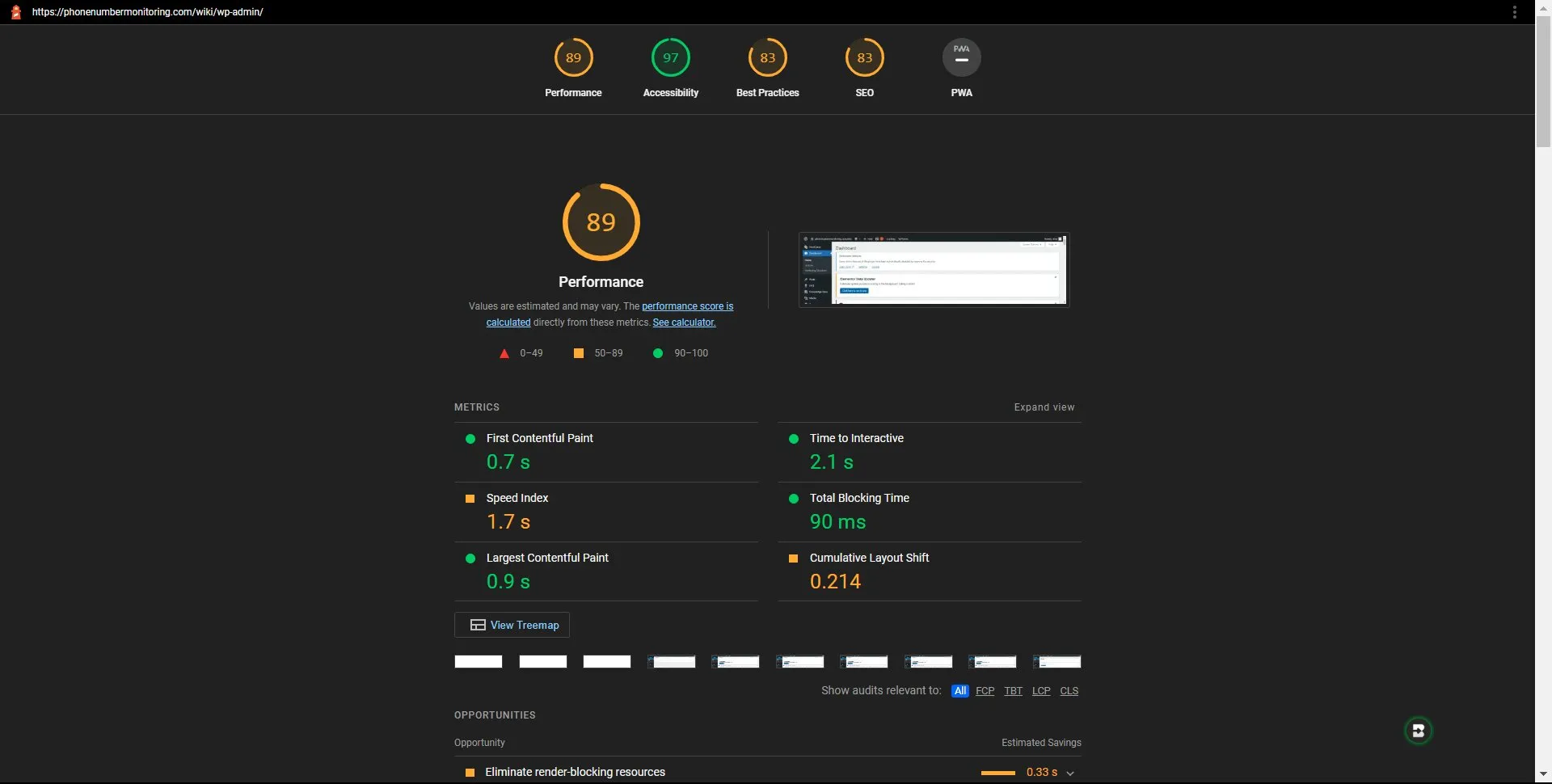
"Website performance monitoring" is often mistaken for website monitoring. In fact, web site performance is just one of the more common factors that many companies monitor. Uptime/downtime statistics are only part of the data that good external monitoring tool collects for you. Another important metric that should be collected is web performance of the site, how long it takes the server to respond and deliver pages or process forms.
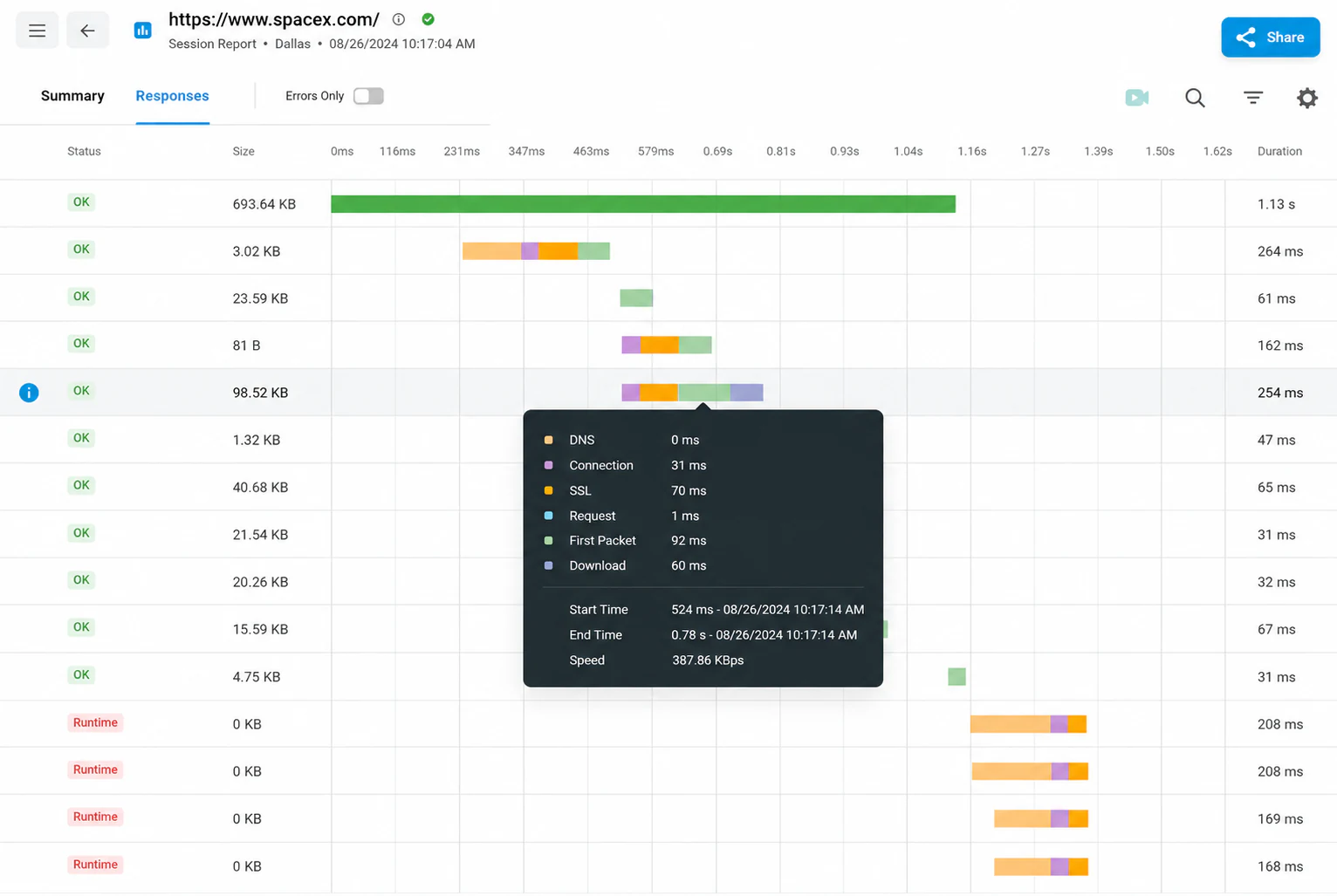
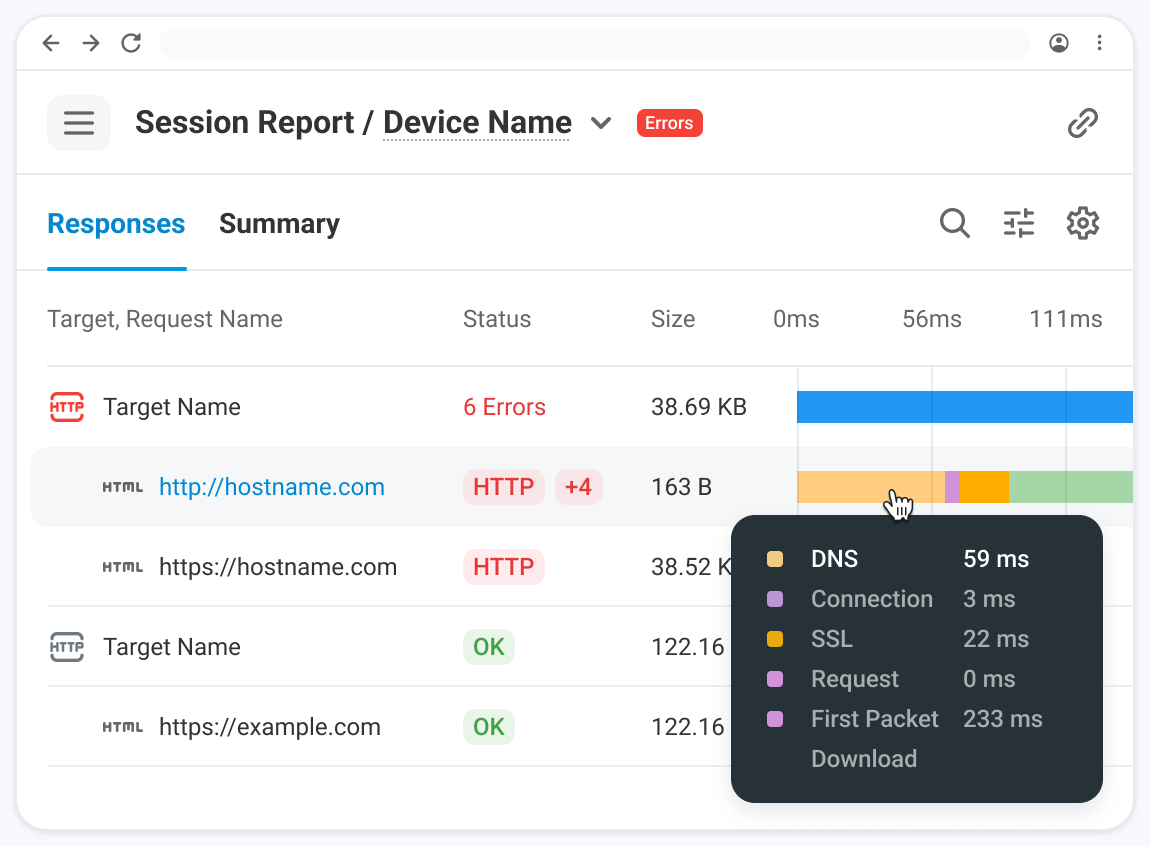
As Dotcom-Monitor® monitors your website, we record web performance data about each page and make that data available through real-time online reports.
It's a dog-eat-dog world and in some industries a competitor could hi-jack your website's content. How would you like to discover that for the past week, half your leads were being redirected elsewhere? You can have your content monitored to make sure that changes have not been made without your knowledge and that your server is responding properly.
Dotcom-Monitor® provides deep content analysis by reviewing each page for proper content and correct server response. In the case of an SSL site, Dotcom-Monitor® checks for Certificate Authority, Certificate Canonical Name, Certificate Date, Certificate Revocation and Certificate Usage to make sure everything remains as it should.
Many web site monitoring services provide an option to "monitor your web site", but they really mean they will make a request to the web server, and they will monitor the server's response with your HTML file. But even the simplest website is composed of more than just HTML. Your HTML file will reference applets, images, forms, controls, scripts and more. The majority of so-called "website monitoring" services are really "HTML monitoring". Dotcom-Monitor® provides a full-page monitoring option, meaning that we will download and check every component of the page, providing you with complete information on user experience..
Seldom will you find static HTML pages anymore. Many websites are database driven, at least in part, and almost every site contains dynamic processes, such as shopping carts, account logins, sign-up processes, and etc. To check the complete "business process" one would have to go through series of steps, following along as a living human being would and making sure each page along the way is properly delivered by the web server. Very few website monitoring services and software can do this for you, which might just be the most important monitoring you need.
Dotcom-Monitor® is able to monitor complex business transactions, and as it proceeds, it checks and records data for each page along the path a real customer would travel. We provide you summarized or sliced information on the whole transaction or each individual step.
Furthermore, recording transactions is a snap with Dotcom-Monitor® Macro recorder. Using the Macro Recorder, you simply go through your website's transactions - shopping carts, online ordering system, banking transaction, etc... - just like a regular user. The Macro Recorder "records" each step of your transaction as you go through your website. It's like having a gopher running errands for you.
The Macro Recorder then uploads the steps in the transaction you want to monitor to the Dotcom-Monitor® server for analysis.
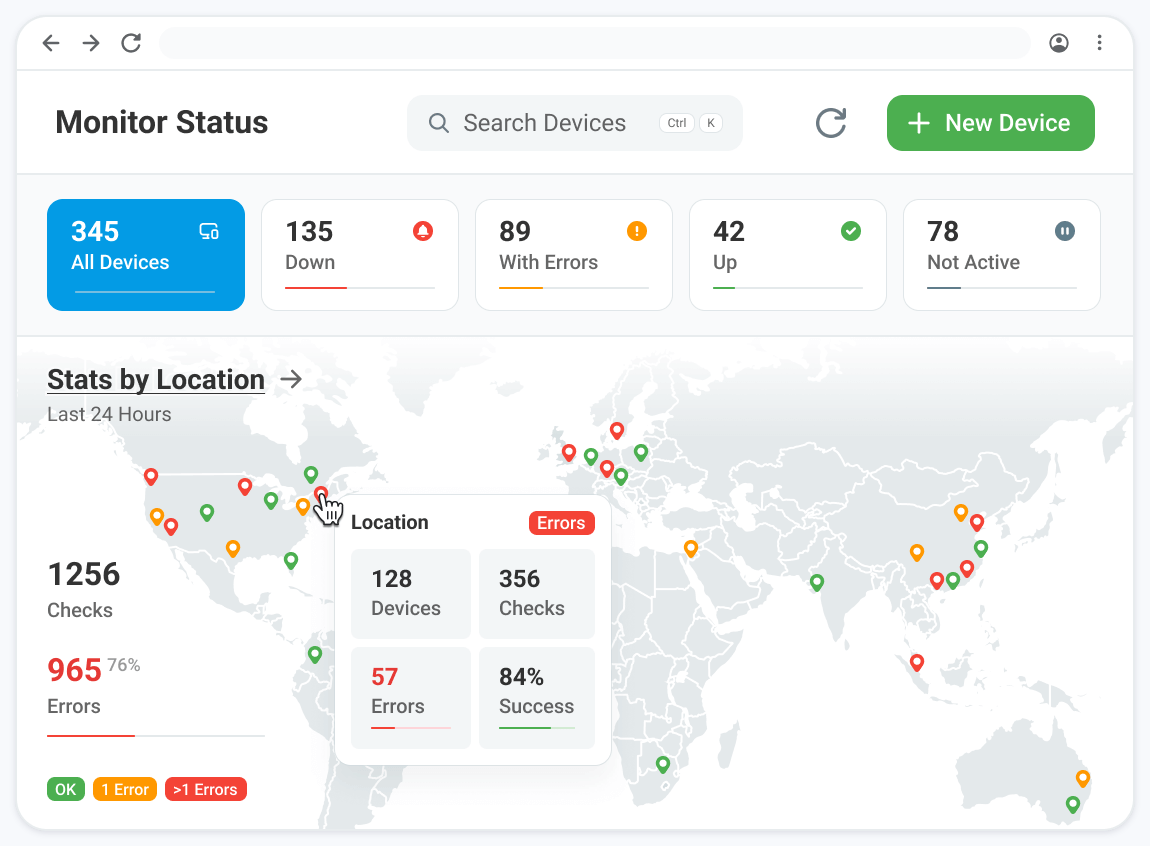
It is important to monitor your site from multiple locations around the world. This gives you a better perspective on site's web performance and availability worldwide. By monitoring from multiple locations around the globe, you will be able to determine if a problem is localized to specific networks or it is something that affects all your customers. Also, you may use the data to choose or optimize networks on which your site hosted.
This is where all internal agents, most web hosts and software usually fall short. Dotcom-Monitor® has more than a dozen agents on three continents to verify that all your customers have access to a properly performing website.
IPv6 is the essential backbone protocol for next-generation networking on the Internet, and is replacing the current IPv4 standard.
Dotcom-Monitor® added Internet Protocol version 6 (IPv6) monitoring to its external website performance monitoring services. Using Dotcom-Monitor®, companies and organizations deploying IPv6-enabled websites can now monitor web site performance, accessibility, and availability from an external user’s perspective.
The Internet is a large and ambiguous creature, spanning across multiple countries, networks and vendors. Short outages are common across the Internet. It is important for your web site monitoring service to determine the difference between a real outage and short mishap somewhere on a network connection. You probably do not want to be notified at 3AM if a router in New Zealand went down for several seconds just at the time your website monitoring service happened to be checking.
Dotcom-Monitor® uses a proprietary algorithm for detecting errors, comparing the results of your site to the results of other sites, of other locations and of other check runs within a short time interval. A summary analysis of all the information tells our agent if it is true or false alert. Based on the number of alerts for clients with a proper configuration, our rate of false alerts are under 0.02%.
Once a problem has occurred and been reported, your web site monitoring tool should provide more information than just the occurrence of the problem. It should provide as much additional information as possible to allow you to quickly and accurately find the cause and correct it.
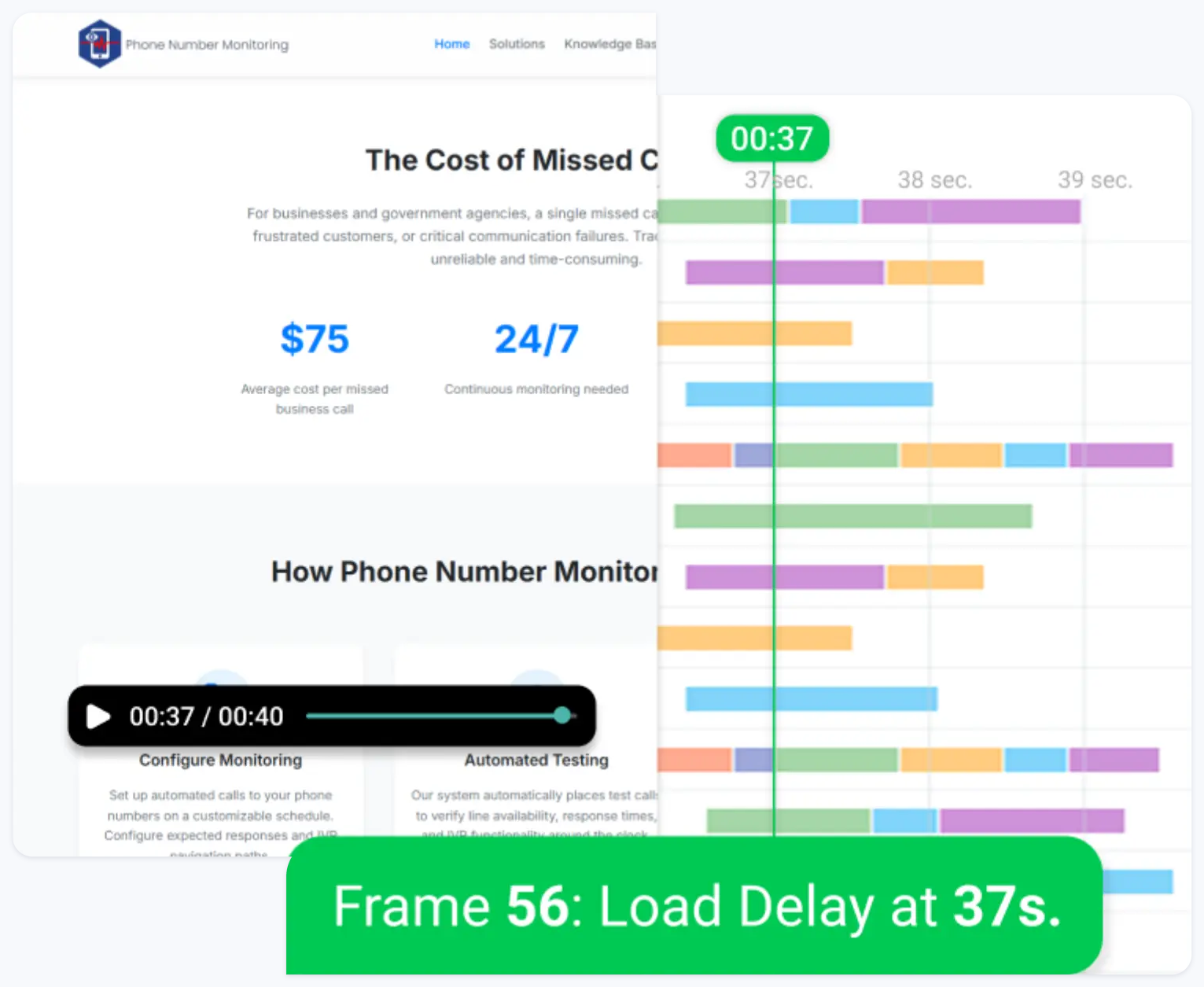
On each problem, Dotcom-Monitor® takes a snapshot of the page and also performs a network trace route. Those two pieces of information will pinpoint for you very close to if not the exact source of the network issue or server "misbehaving" problem
You should have the option of being notified about problems in multiple ways, not only by email. If your network goes down, sending an email will not do you a lick of good, unless your email server is located on a different network.
Dotcom-Monitor® provides alerts by phone, pagers, SMS and even by wireless email. Your choice.
Remember that e-business consists of more then just a web server. At minimum, there must be DNS (data name servers) and Mail Servers to function. Common businesses run FTP servers, firewalls, routers and much more. Your website monitoring service should be able to monitor all those functions, providing complete coverage to your e-business infrastructure so your business never goes down without your knowledge.
Phishing attacks are growing steadily at 64% worldwide per year. As the concern over cyber threats grows, an untraditional use of website monitoring has become part of the cyber security portfolio. Learn how certain Dotcom-Monitor clients are provocatively addressing phishing attacks with website monitoring.The [read more]
In addition to the internal system security and protections a bank uses, external website monitoring aids in quickly recognizing and dealing with potential security threats. In many cases external monitoring provides the earliest warning and helps to pinpoint what is going wrong during a cyber attack.The [read more]
If you bank with anyone larger than a local credit union, it's likely your bank's website has been attacked within the past few months as recent denial-of-service cyber attacks have increased in both frequency and severity. An April 2013 NBC News report found that in the six weeks prior, 15 of the nation's [read more]