




API Monitoring Software for Uptime, Performance & Reliability

API monitoring is the practice of continuously testing your API endpoints for availability, performance, and data correctness. Dotcom-Monitor delivers this from 30+ global locations across REST, SOAP, and GraphQL — detecting failures in seconds, not when customers report them.
API Monitoring Built for Uptime, Performance, and Transaction-Level Diagnostics
Trusted by 10,000+ Organizations Worldwide​
Dotcom-Monitor runs synthetic API checks from 30+ global locations at 1-minute intervals. It helps teams detect endpoint failures, slow responses, and payload errors before users do.
Aflac logo — Dotcom-Monitor customer
Dell logo — Dotcom-Monitor customer
Comcast logo — Dotcom-Monitor customer
Dish Network logo — Dotcom-Monitor customer
Citrix logo — Dotcom-Monitor customer

What Is API Monitoring?

API monitoring is the practice of continuously validating your APIs’ availability, response times, and data correctness. In modern architectures — where microservices, third-party integrations, and distributed systems depend on dozens of API calls per user session — a single endpoint failure can cascade into checkout failures, blocked logins, and broken data syncs. API uptime monitoring and API performance monitoring work together to detect these failures in seconds, not hours.

Why Choose Dotcom-Monitor for API Monitoring

Choosing the right API monitoring platform requires more than uptime checks. It requires validated response accuracy, global coverage, native incident routing, and CI/CD integration — all backed by a 99.99% uptime SLA.

30+ Global Monitoring Locations

Run distributed API health checks from over 30 monitoring locations across North America, Europe, Asia-Pacific, and South America. Detect regional latency spikes, DNS resolution failures, and geo-specific availability issues that centralized monitoring tools miss.

99.99% Uptime SLA-Backed Platform

Dotcom-Monitor's infrastructure backs a contractual 99.99% uptime commitment. The platform is built to monitor your payment, authentication, and data APIs with the reliability your production environment demands — so your monitoring tool never becomes the single point of failure.

Multi-Step API Transaction Tracing

Trace performance across chained API calls — from authentication to data retrieval to transaction completion. Isolate whether degradation originates in a specific endpoint, an auth token refresh, or a third-party dependency. Step-level diagnostics reduce troubleshooting time from hours to minutes.

Native Integrations with PagerDuty, Slack & Teams

Route alerts directly into PagerDuty, Slack, Microsoft Teams, or OpsGenie via native integrations. Configure escalation policies with email, SMS, and phone call notifications. Webhook support extends alerting to any HTTP-compatible service.

Configure via UI or REST API

Set up REST and HTTP/S API monitoring through the Dotcom-Monitor dashboard or programmatically via the Web API. Automate monitoring configuration within CI/CD pipelines using Jenkins, Azure DevOps, GitHub Actions, or any platform that supports HTTP calls.

24x7 Expert Support

Access monitoring engineers around the clock — not just a help desk. Whether you need assistance configuring multi-step API transactions, setting up JSONPath assertions, or troubleshooting complex authentication flows, our team provides configuration-level technical guidance — not scripted help desk responses.

Core API Monitoring Capabilities

Monitor REST, SOAP, and multi-step API workflows with native support for the authentication methods and API collections your team already uses.

API-Level Multi-Step Monitoring

Multi-Step Transaction Monitoring

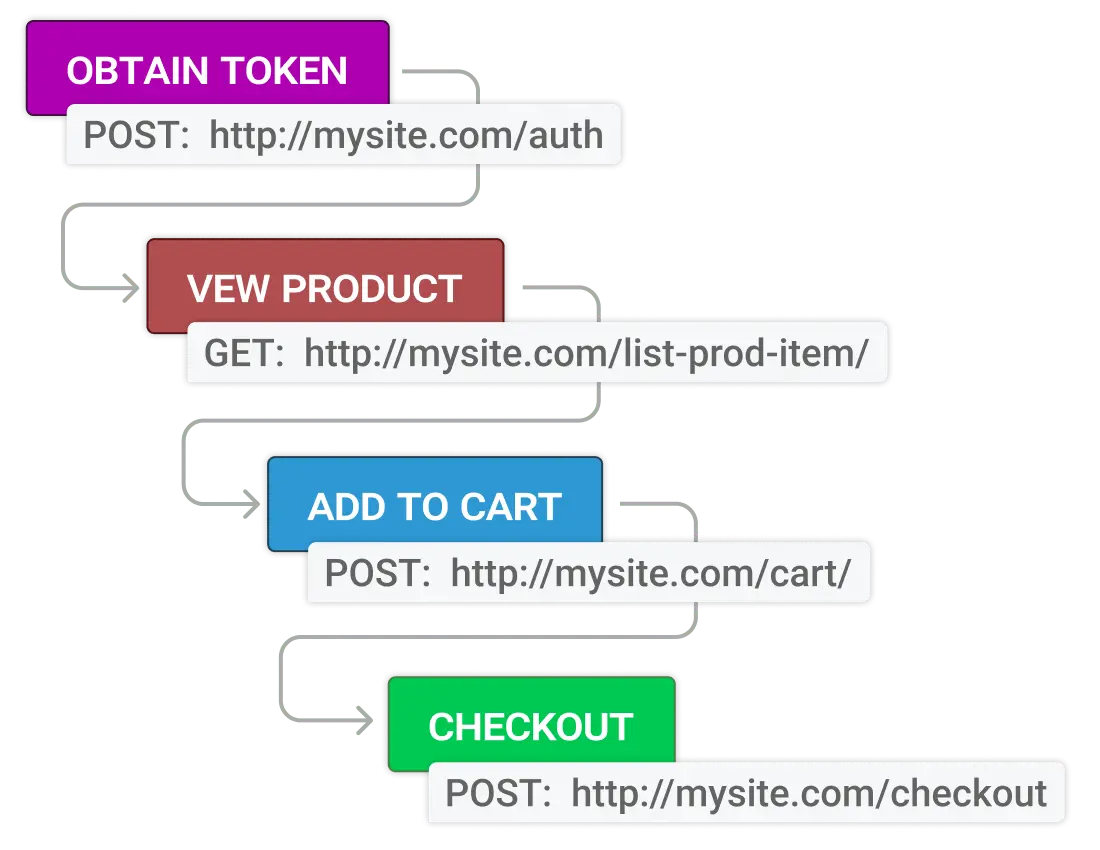
Validate complete API workflows — not just individual endpoints. Chain sequential API calls that mirror real user journeys: authenticate, query data, submit a transaction, and verify the response. Each step passes data to the next, catching failures that single-endpoint checks miss.

Authentication Standards Support

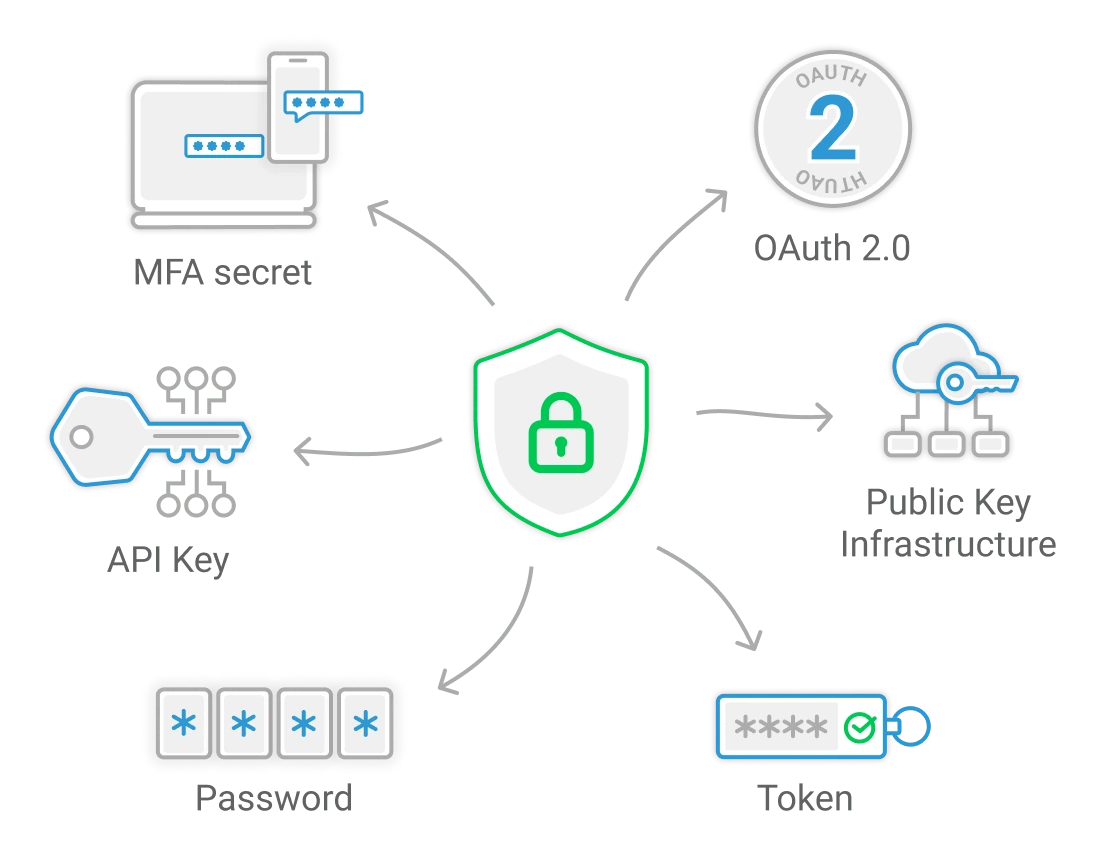
Monitor APIs that require authentication without workarounds or custom scripting. Dotcom-Monitor natively supports the most common authentication methods used in modern and legacy APIs, so your monitors match production access patterns.

Integration with Postman Collections

Import your existing Postman Collections directly into Dotcom-Monitor — no manual re-creation required. Convert the API tests your team already maintains into 24/7 production monitors in under 5 minutes.

Integration with Insomnia Collections

Already using Insomnia for API development and testing? Import your Insomnia request collections into Dotcom-Monitor to turn development-time API tests into continuous production monitoring — maintaining the same request structure, headers, and body payloads.

Integration with Insomnia Collections

REST & SOAP Web Service Monitoring

Monitor both RESTful and SOAP-based web services from a single platform. Validate HTTP methods, headers, request bodies, and response content for REST endpoints — and import WSDL definitions, XML schemas, and WS-Security configurations for SOAP services.

Public & Internal API Monitoring

Monitor externally facing APIs from 30+ global locations — and extend the same visibility to internal APIs behind your firewall using Dotcom-Monitor’s Private Agent. Deploy a single-binary agent within your network to monitor internal endpoints without exposing them to the public internet.

How API Monitoring Works

Getting started takes under 5 minutes. Dotcom-Monitor follows a four-step workflow to validate API availability, performance, and response correctness.

Define endpoints and assertions

Configure REST or SOAP endpoints, request headers, JSONPath/XPath payload validations, and authentication (OAuth 2.0, API Key, Bearer Token) — or import directly from Postman or Insomnia collections.

Schedule global synthetic checks

Run synthetic checks at 1-, 3-, 5-, or 15-minute intervals from 30+ monitoring locations across North America, Europe, Asia-Pacific, and South America.

Track uptime & performance metrics

Track availability percentage, P95/P99 response times, Time to First Byte (TTFB), DNS resolution time, and error rates by HTTP status code across all monitored endpoints.

Receive real-time alerts

Get alerted via email, SMS, Slack, PagerDuty, or Microsoft Teams within seconds of a threshold breach — including response time, status code, and content validation failures.

Step 01
Step 02
Step 03
Step 04

This workflow runs continuously across all monitored endpoints.

Start Your 30-Day FREE Trial

Full access to all monitoring features — API uptime, synthetic checks, multi-step transactions, and global coverage from 30+ locations. No credit card required.

Why API Monitoring Matters

APIs power payments, authentication, inventory systems, financial transactions, healthcare portals, and SaaS integrations. When APIs fail — even briefly — the business impact is immediate — lost revenue, failed transactions, and broken user workflows.

The Hidden Cost of API Downtime

MTTR Impact

Mean Time to Resolution

Without proactive monitoring, teams rely on customer reports to detect API failures — adding 30 to 60 minutes to detection time alone. Continuous synthetic monitoring shortens detection to under 60 seconds, enabling faster root cause isolation. The difference between a 5-minute resolution and a 45-minute outage often comes down to when the alert fires.

SLA Penalty & Compliance Exposure

Contractual & Regulatory Risk

For B2B SaaS providers, FinTech platforms, and healthcare systems, API downtime triggers more than lost revenue — it triggers contractual SLA penalties, compliance violations, and audit findings. A payment processing API that breaches its 99.9% uptime commitment faces financial clawbacks and lost contract renewals. Proactive monitoring provides the documented uptime evidence needed to defend SLA adherence and satisfy audit requirements.

Revenue-Per-Minute Exposure

For an e-commerce platform processing 100 orders per minute at an average of $50 per order, a 5-minute API outage translates to $25,000 in lost revenue. A failed checkout API, payment authorization delay, or authentication error halts conversions immediately — and the financial impact compounds with every minute of downtime.

Third-Party API Blind Spots

Modern applications depend on third-party services — payment gateways (Stripe, PayPal), identity providers (Okta, Auth0), shipping APIs, and CRM systems. Even when your internal infrastructure is healthy, a degraded external API can break checkout, login, and data sync workflows. Monitoring third-party endpoints provides the data to isolate whether failures originate internally or externally.

Dotcom-Monitor validates availability, latency, and response integrity at 1-minute intervals from 30+ locations — reducing MTTR, protecting uptime commitments, and catching API issues before they block transactions.

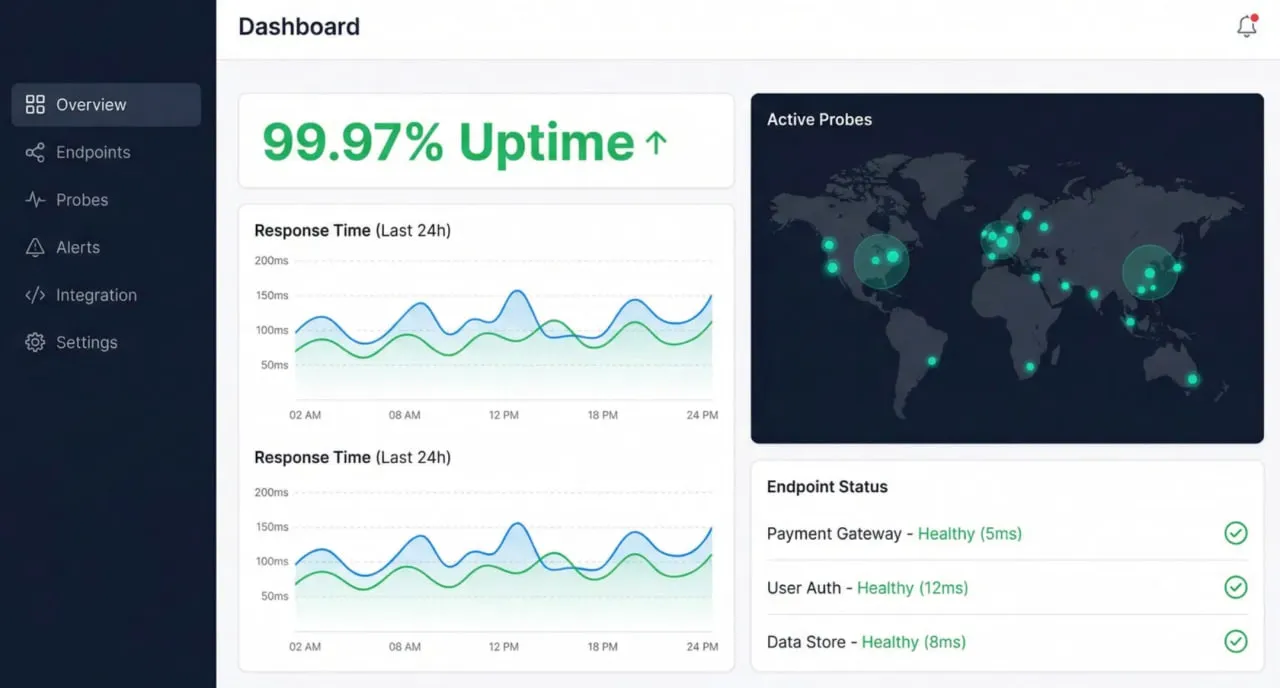
Dotcom-Monitor dashboard displaying API uptime and multi-step transaction monitoring metrics

See It in Action — Talk to Our Team

Not ready to start a trial? Walk through the platform with a monitoring engineer who can show you how to set up multi-step API checks, configure alerting, and integrate with your CI/CD pipeline.

What Our Customers Say

Real reviews from verified Capterra users — see why teams choose Dotcom-Monitor for API and website monitoring.

"I absolutely love the comprehensive monitoring services Dotcom-Monitor provides. The real-time alerts and detailed performance analytics have been a game-changer for our website's uptime and speed. The global monitoring feature ensures that our site is optimized everywhere, and the intuitive dashboard makes it easy to track performance. Their customer support is exceptional — always responsive and efficient."
Tomer C.
Managing Director · Facilities Services
Verified Capterra review · March 2025
"One of Dotcom's best features is the push/pull API capabilities that provide us with network performance data. We use this to monitor for performance issues as well as page loading stats. Dotcom-Monitor allows us to monitor multiple services within one interface and platform. It's allowed us to operate more efficiently."
Gregory S.
Manager · Broadcast Media
Verified Capterra review · May 2020
"I have been thoroughly impressed with the level of detail and comprehensiveness of the reports generated by the software. Moreover, the support team at Dotcom-Monitor has exceeded my expectations. On almost a daily basis, I reach out with various questions and they have consistently demonstrated unwavering patience, providing detailed and insightful answers."
Shirin R.
Software Test Engineer · Computer Software
Verified Capterra review · February 2023

4.5

Capterra

80 reviews

4.6

Ease of Use
Capterra Score reviews

4.6

Customer Service
Capterra Score reviews

All reviews sourced from Capterra verified reviews. Ratings as of January 2026.

API Monitoring Pricing — Start Free, Scale as You Grow

Every plan includes REST API monitoring, synthetic checks, multi-step transactions, and uptime reporting. No hidden fees.

Free

Free Forever

$0

Most popular

Subscriptions

Starting at

$19

.99 /mo

Enterprise

Custom Pricing

Let’s talk

API Monitoring Use Cases by Industry

Every industry depends on APIs for critical operations. The specific endpoints and failure modes differ, but the need for continuous monitoring is universal.

SaaS Providers

Monitor internal and third-party API dependencies to keep integrations returning correct data on time. Detect when a partner API degrades before it causes cascading failures in your product.

E-commerce

Track payment gateway APIs (Stripe, PayPal), inventory systems, and shipping provider endpoints. A 5-minute outage on a checkout API during peak traffic can cost tens of thousands in lost revenue.

FinTech

Ensure financial APIs meet regulatory security standards and sub-second latency requirements. Monitor transaction processing endpoints, KYC verification services, and banking integrations to avoid failed transactions and compliance violations.

Healthcare

Monitor APIs connecting EHR systems, insurance portals, and telemedicine platforms. Ensure HIPAA-compliant data exchange endpoints remain available and responsive for patient-facing applications.

Enterprise IT

Validate API integrations across departments — CRM, ERP, HR, and communication platforms. Detect cross-system failures before they disrupt internal workflows and business operations.

Dotcom-Monitor helps teams across industries keep APIs responding correctly within SLA thresholds — preventing the failures that block transactions and break workflows.

API Monitoring Best Practices

Apply these practices to reduce mean time to detection, improve alert accuracy, and catch failures before they reach users.

01. Monitor from multiple geographic locations

A single monitoring location cannot detect regional DNS failures, CDN misconfigurations, or geo-specific routing issues. Run synthetic checks from at least 5 distributed locations to identify availability gaps that affect users in specific regions.

02. Validate response payloads — not just status codes

An HTTP 200 does not guarantee correctness. Use JSONPath assertions (for REST) or XPath assertions (for SOAP) to verify that response bodies contain the expected data structure, field values, and content types.

03. Set baseline-derived alert thresholds

Avoid static thresholds that trigger false positives. Establish performance baselines for each endpoint, then configure alerts at 2x the P95 response time. Route critical alerts to PagerDuty or Slack for immediate triage.

04. Monitor authentication flows end-to-end

Token expiration, OAuth refresh failures, and certificate rotation issues are among the most common causes of API outages. Include authentication steps in your monitoring to catch credential-related failures before they cascade.

05. Test multi-step transactions, not just individual endpoints

Real user journeys involve chained API calls — login, query, submit, confirm. A single endpoint may pass while the full transaction fails due to session handling, data dependency, or sequencing issues. Multi-step monitoring catches these integration failures.

06. Monitor third-party API dependencies separately

Payment gateways, identity providers, shipping APIs, and CRM integrations can degrade independently of your infrastructure. Set up dedicated monitors for each external dependency so you can isolate whether failures originate internally or externally.

07. Include API monitoring in your CI/CD pipeline

Run post-deployment synthetic checks to validate that new releases haven't broken existing API contracts. Automated smoke tests after each deployment catch schema changes, missing fields, and regression errors before they reach production users.

Why Synthetic API Monitoring — Not Just Logging

Application logs, APM traces, and error tracking show what happened inside your infrastructure. Synthetic API monitoring complements these tools by testing your APIs from the outside, the same way your customers and partners consume them. It catches failures that internal observability misses: DNS resolution errors, TLS certificate problems, CDN misroutes, and network-level timeouts.

Feature
Synthetic Monitoring
Logging & Tracing
Perspective
✅ Tests from the outside in — the way your customers experience your API
Observes from the inside out — what your servers and code see
Detection
✅ Catches DNS failures, network routing issues, TLS errors, and CDN problems that internal tools never see
Identifies application-level errors, slow queries, and code exceptions
Coverage
✅ Runs 24/7 from 30+ global locations, even during zero-traffic periods
Only generates data when real users are actively making requests
Proactive vs. Reactive
✅ Detects failures before customers encounter them
Reports issues after they've already affected users

The takeaway: Logs and traces answer “what went wrong in our code?” Synthetic monitoring answers “can our customers actually use this API right now?” Teams with the lowest MTTR use both — internal observability for debugging, and synthetic monitoring for continuous external validation.

Get answers

FAQ — Answering Your API Monitoring Questions

To monitor OAuth 2.0 authenticated APIs: 1) Configure your client credentials (client ID and secret) in your monitoring tool, 2) Set the token endpoint URL, 3) Define the required scopes, 4) The monitoring tool automatically requests new tokens before expiration. Dotcom-Monitor supports OAuth 2.0 client credentials, authorization code, and refresh token flows, plus API key, Bearer token, and mTLS authentication.

GraphQL APIs require different monitoring approaches than REST: 1) Monitor query complexity and depth to prevent performance issues, 2) Validate response schemas since GraphQL always returns 200 OK even with errors, 3) Check the ‘errors’ array in responses, 4) Monitor specific queries and mutations rather than just endpoints, 5) Track resolver performance for nested queries. Dotcom-Monitor supports GraphQL with custom query payloads and response validation.

API monitoring focuses on external endpoint availability, response times, and data validation from the user’s perspective (outside-in). APM (Application Performance Monitoring) tracks internal application behavior like code execution, database queries, and server resources (inside-out). For complete visibility, organizations typically use both: API monitoring catches user-facing issues while APM helps diagnose root causes.

When you receive an API alert: 1) Check if the issue is confirmed from multiple monitoring locations to rule out network problems, 2) Review the error details—status code, response body, and timing breakdown, 3) Verify if the issue affects all endpoints or specific routes, 4) Check recent deployments or infrastructure changes, 5) Escalate based on severity using integrated tools like PagerDuty, Slack, or Microsoft Teams. Automated diagnostics reduce mean time to resolution (MTTR).

Yes, internal APIs behind firewalls can be monitored using Private Monitoring Agents. These lightweight agents are installed within your network and communicate securely with the monitoring platform. This allows you to monitor internal microservices, private APIs, and staging environments without exposing them to the public internet. Dotcom-Monitor Private Agents support Windows and Linux environments.

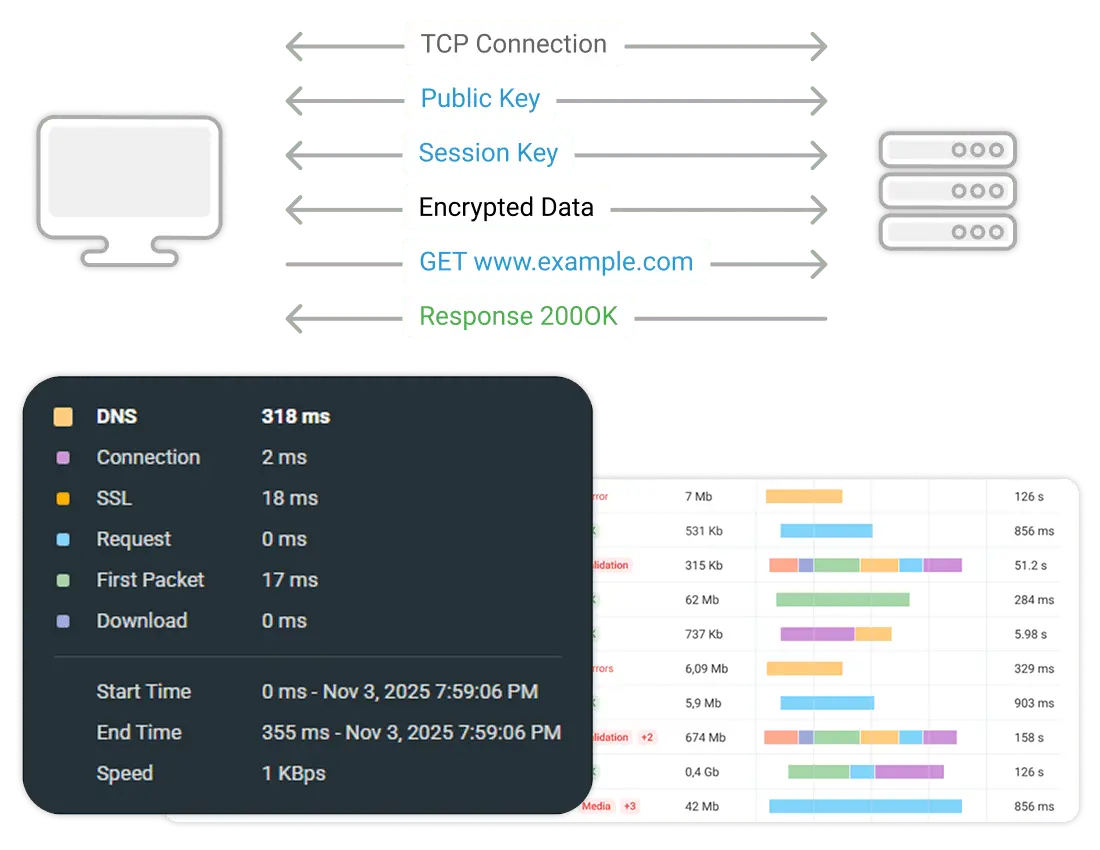
A good API response time is under 200ms for simple endpoints and under 1 second for complex operations. Industry benchmarks: excellent (<100ms), good (100-200ms), acceptable (200-500ms), slow (500ms-1s), poor (>1s). Response times above 3 seconds significantly impact user experience and conversion rates. Dotcom-Monitor tracks response time components including DNS resolution, TCP connection, SSL handshake, and time to first byte.

Essential API monitoring metrics include: Availability (uptime percentage, target 99.9%+), Response Time (total latency and percentiles like P95/P99), Error Rate (4xx and 5xx responses), Time to First Byte (TTFB), DNS Resolution Time, SSL Handshake Time, and Throughput (requests per second). Advanced metrics include response payload validation, certificate expiration, and geographic performance variance.

API monitoring continuously validates the availability, response time, and data correctness of your API endpoints. It encompasses API uptime monitoring (is the endpoint reachable?), API performance monitoring (how fast does it respond?), and payload validation (is the data correct?). Unlike simple uptime checks that only confirm an HTTP 200 response, full API monitoring validates response payloads using JSONPath assertions, verifies authentication flows, and measures Time to First Byte (TTFB) — ensuring your APIs are not just reachable, but functionally correct.

APIs connect your frontend, backend, and third-party services. A single failed endpoint can break checkout flows, block user authentication, or disrupt data synchronization across services. Proactive monitoring detects these failures in seconds — reducing Mean Time to Detection (MTTD) from hours to under a minute — and enables teams to resolve issues before they impact users or revenue.

Monitoring frequency depends on the criticality of the endpoint. High-traffic, revenue-impacting APIs (e.g., payment processing, authentication) should be monitored at 1-minute intervals. Less critical endpoints may use 5- or 15-minute intervals. Dotcom-Monitor supports configurable monitoring frequencies starting from 1-minute intervals across all global monitoring locations.

Dotcom-Monitor chains sequential API calls into a single monitoring task, passing data between steps. For example, you can validate a complete e-commerce flow: authenticate → search for a product → add to cart → submit payment → verify confirmation. Each step’s response is validated with assertions before proceeding to the next, ensuring the entire transaction path is functional.

API testing is performed during development and QA to verify that endpoints behave correctly under controlled conditions. API monitoring runs continuously in production, tracking real-world availability, latency, and response accuracy over time. Testing catches bugs before deployment; monitoring catches failures, regressions, and performance degradation after deployment.

Yes. Dotcom-Monitor monitors any publicly accessible API endpoint, including third-party services like Stripe, Twilio, Okta, Salesforce, and shipping provider APIs. This allows you to detect when an external dependency degrades and isolate whether failures originate in your infrastructure or a third-party service.

Dotcom-Monitor supports OAuth 2.0 (authorization code, client credentials, and implicit flows), API key authentication, Bearer tokens, Basic Auth, and custom header-based authentication. This covers the vast majority of authentication schemes used in production REST APIs.

Yes. Dotcom-Monitor provides native API alerting integrations with PagerDuty, Slack, and Microsoft Teams, allowing you to route alerts directly into your existing incident management and collaboration workflows. Additionally, webhook support enables integration with any HTTP-compatible service, including OpsGenie, ServiceNow, and custom internal tools.

Yes. Dotcom-Monitor’s REST-based Web API allows you to programmatically create, update, and manage monitoring tasks as part of your CI/CD workflow. Teams using Jenkins, Azure DevOps, GitHub Actions, or similar platforms can trigger post-deployment monitoring checks to validate API health before routing production traffic.

Start Monitoring Your APIs Today

Join 10,000+ organizations that trust Dotcom-Monitor to protect API uptime, validate transactions, and reduce MTTR. Set up in under 5 minutes.