Performance Tech Tips
Landing Page Monitoring: Why, When and How to Do It Right
Learn why it’s critical to monitor landing pages for uptime and performance from multiple geographic locations. Read about best practices, tips, & more.

Learn why it’s critical to monitor landing pages for uptime and performance from multiple geographic locations. Read about best practices, tips, & more.
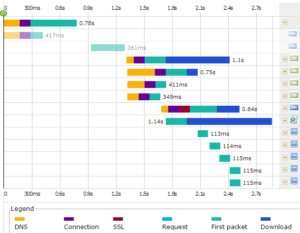
When you’re working to improve your website’s performance, a waterfall chart is like a visual roadmap that shows you exactly where your site might need a boost. Whether you’re trying to speed up load times, improve the user experience, or fix any bottlenecks, understanding how to read and interpret a

So why do you want to know if your website is mobile friendly? Most likely it is because you have heard about last year’s announcement from google over at google webmaster central. It turns out that Google has updated their algorithm to significantly increase the weight of mobile-friendliness as a ranking signal. That’s right, significantly! So, optimizing your site for mobile is the way of the future!

At Dotcom-Monitor we agree with Google that “we think that internet users’ time is valuable, and that they shouldn’t have to wait long for a web page to load.” This was their opening message today when they announced the release of their new compression algorithm, Brotli. Brotli was named after
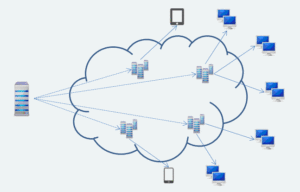
Most websites that exist today rely on third-party elements in one form or another. For example, there are many services to gather analytics about site traffic such as Google analytics, but in order to work properly they require you to load a small script as a part of each web
The new DNS caching features at Dotcom-Monitor allow you to perform some interesting tests that show how DNS caching can affect your page load speed.
We realize that many organizations monitor their online services with a number different goals in mind, and so we listened to the feedback we received that some users want to include the DNS response time in their monitoring and some users want to be able to remove DNS response from their monitors.
How you wish to handle DNS response time in regard to your monitoring needs is up to you, but we want to take this opportunity to show the differences in how DNS response time affects website load using our new tools.
We ran a test monitoring YouTube from a single location in the midwest United States with three different DNS cache settings. A basic HTTP full page load on the YouTube front page resulted in some interesting, although not that surprising results.
Keep in mind the results will vary depending upon a number of variables such as which locations you are monitoring from, the time of day, the load on the DNS servers, and on the website servers.
Despite claims that slow websites are a major turnoff for site visitors the problem is growing. However, there is a bright spot, as some websites have caught on to an emerging key metric for the usability of a website and the user experience it delivers: Time to Interact (TTI).
A waterfall chart, a form of data visualization that maps the cumulative effect of sequentially introduced values, can help. When tracking Web performance, a waterfall chart can help determine how long it takes for each action between the Web server and the user when a user accesses a website. This data can help website administrators understand how individual elements of a their sites are impacting performance.
A customer’s experience with your website—including its speed, ease-of-use and dynamism—can make or break their decision to do business with your company. In today’s competitive market, there is little room to commit errors when it comes to your website. The key to an unmatched Internet experience for your customers, therefore, starts and ends with the quality of your site.