

What is a Site Reliability Engineer (SRE)?
What is Site Reliability Engineering? Site Reliability Engineering, or SRE, is a set of principles and practices that applies software engineering techniques to the challenges of IT operations. SRE originated

How to Monitor Internal Applications Behind Your Firewall
Monitor internal apps behind your firewall: private agent architecture, synthetic and network checks, health checks, and alerting setup.

Monitoring Applications That Use Azure ADFS
ADFS (Active Directory Federation Services) is a solution from Microsoft for single sign-on (SSO) functionality. It is used by organizations that have their users on Windows Servers to provide authentication

SLA Compliance for SaaS Businesses
An SLA is a key component for guaranteeing service levels are being met. Learn more about how synthetic monitoring can protect your SaaS business.
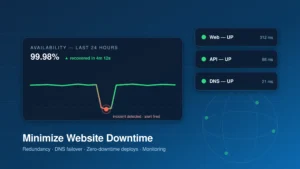
Best Practices to Minimize Website Downtime
Learn how to prevent website downtime: redundancy, DNS failover, zero-downtime deploys, surge planning, and monitoring that alerts you first.

Challenges in Monitoring Web Applications That Utilize SSO
Single Sign-On (SSO) has become a popular choice for many web applications, allowing users to access multiple applications with a single login. It’s a powerful tool for improving user experience
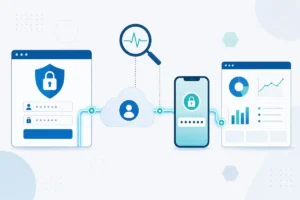
Monitoring Applications That Require IAM Authentication
How to monitor apps behind SSO and MFA logins: scripting authenticated flows, handling OTP, securing credentials, and timing each step.

Stack Trace Monitoring: Gaps in User Experience
Stack traces show where code broke, not what users experienced. See the gaps in stack trace APM and how synthetic monitoring fills them.

Monitoring AJAX Applications
A good application monitoring solution will provide you with the visual representation of the performance, growth, and usage of your AJAX applications. These metrics, along with others, are the critical

Monitoring Applications that use Okta for User Authentication
Okta is a trusted leader in identity and access management, helping enterprises provide secure access to important tools for employees, partners, suppliers, and customers. With its extensive integration network—connecting to over

Why Traditional Monitoring Isn’t Enough for Modern Web Applications
As web applications become more dynamic and complex, traditional monitoring tools often fall short of providing the insights needed to ensure top-notch performance. Modern web applications rely on numerous interconnected
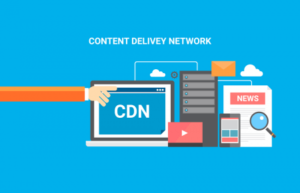
Why a CDN Doesn’t Solve All Your Performance Needs
Content Delivery Networks (CDNs) have become essential for any business looking to improve website speed and reliability. By caching content on multiple servers across the globe, CDNs help reduce load