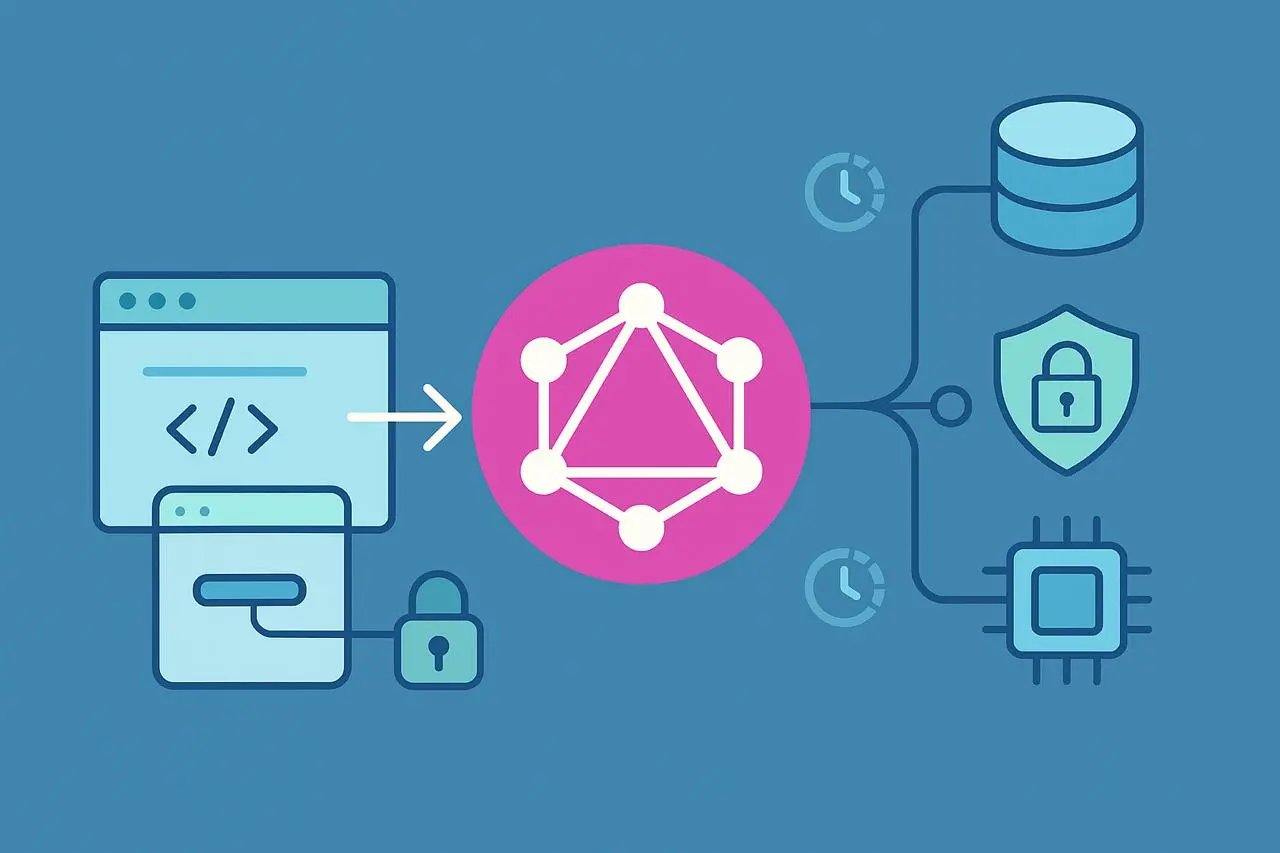
 GraphQL isn’t just another API protocol—it’s a new layer of abstraction. It collapsed dozens of REST endpoints into one flexible interface where clients decide what data to fetch and how deep to go. That freedom is a gift for front-end teams and a headache for anyone tasked with reliability.
Traditional monitoring doesn’t work here. A REST endpoint can be pinged for uptime. A GraphQL endpoint always returns “something.” The difference between “working” and “broken” hides inside the response payload.
That’s where synthetic monitoring becomes essential. By executing real queries and mutations from the outside in, it lets you see exactly what users see—and measure whether the system behind that elegant schema is actually healthy.
Why GraphQL Monitoring Requires a Different Approach
Before tackling GraphQL-specific challenges, if you’re new to the approach, our guide on what is synthetic monitoring explains the outside-in testing model these checks are built on. GraphQL APIs are dynamic by design. Every query is a custom composition, built by the client in real time. There’s no single URL pattern to monitor, no guaranteed payload shape, and no fixed latency profile.
This makes traditional uptime checks nearly useless. A static probe might return a perfect 200 OK even when critical resolvers are failing or timing out. Meanwhile, users experience blank dashboards, missing data, or partial responses.
Synthetic monitoring solves this mismatch by executing the same queries users do, validating both data and structure. It doesn’t just measure “alive or dead”—it measures truthfulness.
GraphQL monitoring, when done properly, gives you three advantages:
- Real functional assurance. Queries actually execute against live data, not mocks.
- End-to-end performance context. Resolver latency, schema evolution, and caching behavior become measurable.
- Predictive reliability. Breakages surface before customers ever feel them.
It’s the bridge between user experience and system reality.
Simulating Real GraphQL Queries with Synthetic Monitoring
A GraphQL monitor should look like a power user—not a ping bot. The goal is to simulate what matters most to actual clients and front-end workflows.
- Select representative queries and mutations. Focus on the high-impact interactions that define business functionality: login, profile retrieval, shopping cart, or analytics queries.
- Parameterize them. Include dynamic variables—IDs, filters, pagination—to expose performance differences between cached and fresh requests.
- Chain workflows together. GraphQL sessions often depend on authentication. Simulate a login mutation, capture the JWT, and reuse it for subsequent queries.
- Validate the response payload. Confirm that key fields exist, expected data types match, and no hidden errors appear in the “errors” array.
For a broader look at how these principles apply across REST, gRPC, and other protocols, see our deep dive into synthetic API monitoring.
Done right, this approach transforms monitoring from static measurement to realistic simulation. It proves—not assumes—that your GraphQL API can execute its most critical functions cleanly under load.
Synthetic testing for GraphQL APIs is about accuracy, not volume. A few well-chosen queries tell you far more than hundreds of meaningless requests.
GraphQL API Performance: Seeing What the Endpoint Hides
The hardest part of GraphQL performance isn’t network latency—it’s resolver latency. Each query might call multiple internal services. One slow resolver adds friction, but a dozen chained together can tank response time even when your infrastructure looks fine.
Synthetic monitoring makes this visible. By executing queries repeatedly and correlating latency across geographies and resolver complexity, it uncovers the nonlinear patterns that traditional APM tools can miss.
Consider three simple truths about GraphQL performance:
- Depth multiplies cost. Every nested field adds processing overhead. Synthetic tests with varying query depths reveal where the API starts to bend.
- Resolvers lie. A service may return quickly while its child resolvers block on external APIs. Only end-to-end synthetic queries can measure total perceived latency.
- Caching deceives. A 100ms cached query says nothing about what happens when the cache expires. Run both warm and cold-path queries to see the delta.
Monitoring this way turns raw latency data into operational intelligence. It shows not only that your GraphQL API works—but how efficiently it works when conditions change.
Catching Schema Drift Before It Hits Production
Schema drift is the silent killer of GraphQL reliability. Developers move fast—renaming fields, adjusting types, deprecating attributes—and everything still compiles. But client code that expects the old shape quietly breaks.
Synthetic monitoring can expose these shifts before customers feel them. By validating response structures against a known-good schema, you can detect mismatches the moment they occur.
Example: your synthetic test expects user.profile.avatarUrl. After deployment, it gets user.avatar.image. The endpoint returns fine. The UI breaks. Your monitor catches it immediately.
Schema validation through synthetic testing isn’t just about catching errors—it’s about maintaining contracts. In a federated or multi-service GraphQL setup, this becomes vital. Continuous schema validation ensures that versioning, federation boundaries, and documentation stay aligned.
Integrating Synthetic GraphQL Monitoring into CI/CD Pipelines
The integration pattern here mirrors what we describe in our guide on using synthetic monitoring in CI/CD pipelines — GraphQL checks are another type of post-deploy smoke test. Modern GraphQL teams deploy multiple times per day. That velocity demands continuous validation.
Integrate synthetic checks into your CI/CD flow so that schema updates, resolver logic, and caching behavior are tested automatically before release. A strong pattern looks like this:
- Deploy to staging.
- Run full GraphQL query and mutation suite through synthetic monitors.
- Compare response shape and latency to baseline.
- Block promotion to production if mismatches or regressions appear.
This approach moves monitoring left—catching performance and compatibility issues before they reach production. Once deployed, the same monitors continue to run as post-release assurance, providing immediate visibility into real-world stability.
With Dotcom-Monitor’s UserView, this workflow becomes even more powerful. You can chain authenticated GraphQL transactions, execute parameterized queries from multiple regions, and feed metrics directly into dashboards—all without writing code-heavy test harnesses. Dotcom-Monitor’s synthetic monitoring platform provides native CI/CD hooks and multi-protocol support to make this integration straightforward.
Common GraphQL Monitoring Pitfalls (and How to Avoid Them)
Even experienced teams fall into predictable traps when monitoring GraphQL APIs. The difference between good and great monitoring is often in the details.
1. Testing Only One Query
A simple query can mask deep inefficiencies. Build a balanced portfolio: shallow, medium, and complex queries to represent varied workloads.
2. Ignoring Authentication
Most GraphQL APIs rely on token-based auth (JWT, OAuth). If your monitor doesn’t refresh tokens, it’ll start failing for the wrong reasons.
3. Using Static Payloads
Synthetic monitoring works best when inputs vary. Real users never send identical queries in perpetuity. Parameterize inputs to simulate live behavior.
4. Monitoring from a Single Region
Resolver latency often spikes at the edge. Run tests from multiple geographies to reveal global variance.
5. Skipping Response Validation
A “200 OK” means nothing if the data is incomplete. Always check fields and error arrays for integrity.
Avoiding these pitfalls doesn’t make monitoring more complicated—it makes it more truthful. The cost of setup pays off in faster detection and fewer user-impacting surprises.
GraphQL API Security and Synthetic Access Control When Monitoring
Synthetic monitoring doesn’t mean cutting corners around security. GraphQL endpoints often expose powerful introspection capabilities, and synthetic clients need careful isolation to avoid becoming a vulnerability.
Follow these guardrails:
- Use dedicated test accounts with minimal permissions.
- Rotate credentials and store them in secure vaults, not config files.
- Scrub logs of any response payloads containing personal data.
- Ensure monitors never mutate production data unless explicitly designed for it.
Synthetic monitoring for GraphQL is about seeing safely—not bypassing safeguards. For another real-world example of monitoring a complex, permission-heavy API ecosystem, see how Salesforce API monitoring with synthetic tests handles connected apps and governor limits.
Interpreting GraphQL Monitoring Data
Synthetic GraphQL results are dense—latency, schema checks, validation results, error logs, geographic data. But data without context isn’t insight. The value comes from interpretation.
First, track trends instead of anomalies. A single slow query doesn’t matter, but a slow trend across regions does.
Second, correlate synthetic metrics with internal telemetry. If synthetic latency rises while server metrics stay flat, your issue lives at the edge—DNS, CDN, or client routing.
Finally, visualize schema and performance history. Knowing when and where queries started failing lets you tie issues directly to code changes or deployments.
Tools like Dotcom-Monitor make this connection intuitive. Synthetic GraphQL monitors integrate into existing dashboards, giving engineering and SRE teams one view of both user experience and system performance.
The Next Challenge: Monitoring GraphQL Subscriptions and Live Queries
The next generation of GraphQL monitoring will focus on real-time data. Subscriptions and live queries replace one-time requests with persistent WebSocket connections—streams that can hang, stall, or drop silently.
Synthetic monitoring has to evolve here too. It needs to:
- Open persistent connections for long-duration tests.
- Validate event delivery frequency and data consistency.
- Measure reconnect times and stream reliability after disruptions.
This is uncharted territory for most teams, but the principles stay the same: don’t assume—simulate.
Just as synthetic HTTP tests replaced pings, synthetic subscription tests will become the standard for validating live GraphQL systems.
Why Synthetic Monitoring Completes GraphQL Observability
Logs and traces tell you how a GraphQL service behaves from the inside out. They reveal the internal mechanics — resolver execution time, database calls, memory pressure — everything an engineer can measure once traffic has already arrived. Synthetic monitoring flips that view. It asks a simpler question: what does the outside world see?
One is introspection; the other is truth. Logs and traces are powerful for diagnosis, but they rely on something already having gone wrong. Synthetic monitoring, by contrast, stages controlled experiments that let you catch performance regressions and schema breakage before they reach production.
When combined, they form a complete observability loop. Tracing shows where latency originates within the resolver chain. Metrics quantify how that latency affects resources and throughput. Synthetic monitoring closes the loop by showing how those internal behaviors translate into real user impact. Together, they create a feedback system that doesn’t just detect failure—it explains it.
You can’t fix what you can’t reproduce. Synthetic monitoring reproduces issues on purpose, continuously, and across geographies, turning unpredictable user pain into repeatable, measurable data. It connects the code you deploy with the experience people actually have.
Conclusion: GraphQL Monitoring for the Real Web
GraphQL gave developers freedom. But freedom without visibility is chaos. Synthetic monitoring reintroduces control.
It executes the same queries your users run, validates that schemas hold steady, and measures resolver performance from real-world vantage points. It catches drift, quantifies latency, and turns subjective “it feels slow” complaints into objective evidence.
In an environment where APIs are federated, cached, and personalized, that kind of validation isn’t optional—it’s survival.
Dotcom-Monitor brings that discipline into practice. UserView lets teams script, schedule, and visualize GraphQL monitors with real authentication and variable payloads. The result isn’t just uptime reporting—it’s operational truth.
GraphQL monitoring isn’t about checking if the endpoint responds. It’s about proving the system works the way it’s supposed to, every time, for every query, from anywhere.