
What is SaaS Monitoring?
SaaS Monitoring is the process of continuously tracking the performance, availability, and reliability of Software-as-a-Service (SaaS) applications to ensure they operate efficiently and deliver the best possible user experience. In an era where organizations depend heavily on cloud-based tools for communication, project management, and analytics, maintaining optimal SaaS performance is more critical than ever.
SaaS monitoring tools enable IT and DevOps teams to detect and resolve issues such as downtime, latency, and slow response times before they impact end users. By helping teams ensure API availability alongside application uptime and transaction speed, these tools provide real-time insight into the services that SaaS platforms depend on, making it easier to identify performance bottlenecks and protect the overall user experience.
SaaS Monitoring Best Practices – How and When
Effective SaaS monitoring is more than just a technical requirement—it’s a strategic process that ensures optimal performance, reliability, and customer satisfaction. In this section, we’ll explore the key practices essential for successful SaaS monitoring and identify the critical components of SaaS environments that require consistent oversight.
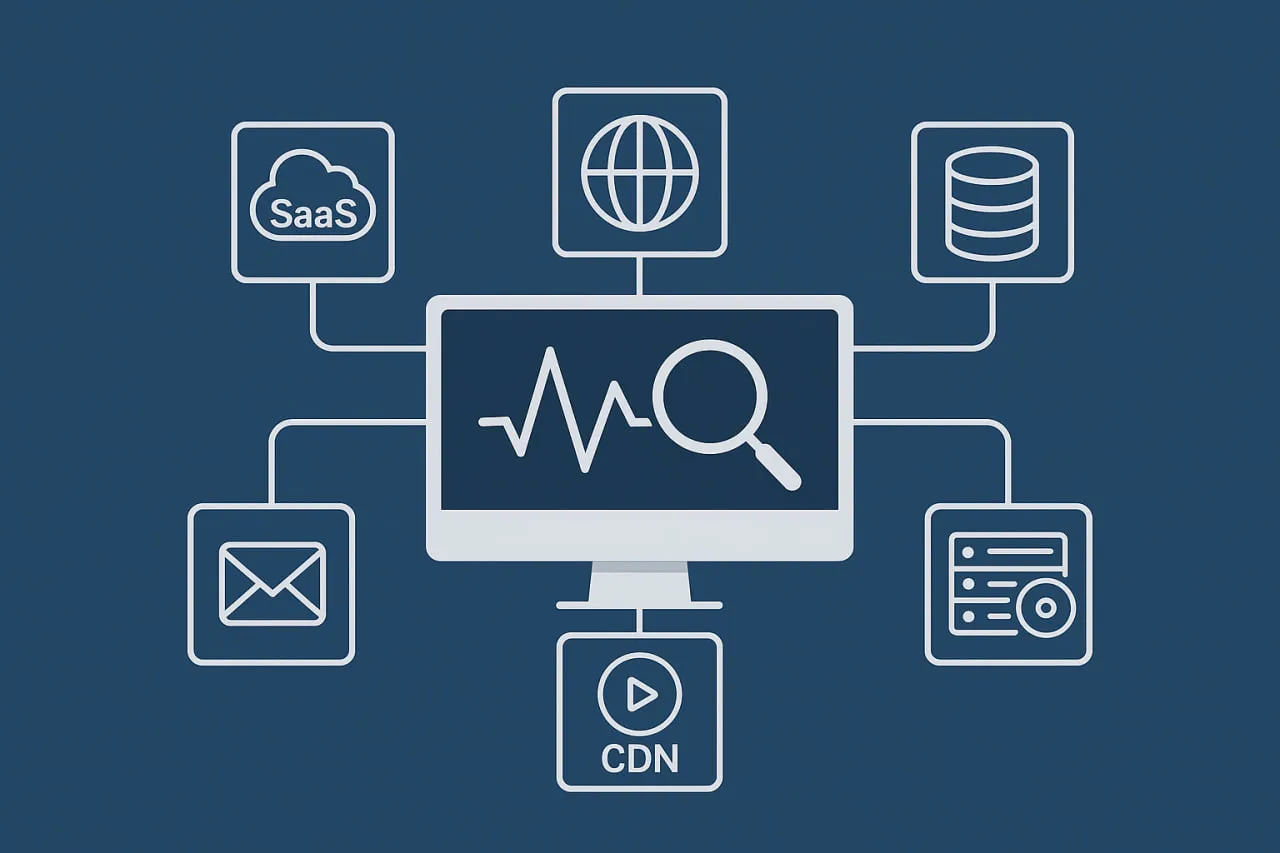
SaaS applications rely on a complex ecosystem that includes domains, mail servers, application servers, Content Delivery Networks (CDNs), Infrastructure as a Service (IaaS), and databases. Each of these components plays a vital role in delivering seamless application performance and user experience. However, each also introduces unique monitoring challenges, such as latency, downtime, or configuration errors. Adopting the right app monitoring strategies, including proactive API latency monitoring to detect slow backend responses before they affect users, helps mitigate these challenges before they escalate.
One of the most effective approaches is external synthetic monitoring, which simulates user interactions to proactively identify issues before they affect real users. This preemptive strategy ensures consistent application uptime and optimal performance across all endpoints.
Additionally, using advanced monitoring tools like Dotcom-Monitor helps organizations follow best practices by automating tests, providing detailed performance reports, and sending alerts in real time. These capabilities not only enhance visibility across your SaaS stack but also empower teams to maintain stability and scalability as the application grows.
Key Components in SaaS Monitoring
Effective SaaS monitoring requires continuous attention to several key components that collectively determine an application’s performance, availability, and user satisfaction. Understanding and monitoring each of these elements ensures that your SaaS platform delivers a reliable and seamless user experience.
Domain
The domain is the digital identity of your SaaS application, serving as the unique web address users rely on for access. Continuous domain monitoring helps prevent downtime and accessibility issues caused by expired SSL/TLS certificates or DNS misconfigurations. Best practices include validating certificate expiration dates, monitoring DNS record changes, and maintaining updated security protocols to ensure uninterrupted service availability.
Mail Servers
Mail servers are critical for managing communications within SaaS applications, including notifications, password resets, and transactional emails. Downtime or configuration errors can lead to delivery failures or data loss. Effective app monitoring involves tracking deliverability rates, bounce rates, and spam reports to ensure messages reach users consistently and securely.
Application Servers
As the operational core of any SaaS solution, application servers host the business logic that powers user interactions. Poor performance or resource bottlenecks can degrade the user experience. SaaS app monitoring should focus on response times, CPU/memory usage, error rates, and throughput. Regular server audits help identify traffic spikes, software flaws, and system inefficiencies before they cause major disruptions. Because SaaS APIs underpin almost every server-level interaction, our ultimate guide to DevOps API monitoring for modern SaaS teams covers the three core behaviors — availability, performance, and correctness — that any complete monitoring strategy must validate.
Content Delivery Network (CDN)
CDNs accelerate content delivery by distributing application assets across multiple global servers. Monitoring CDNs ensures users experience low latency and fast load times regardless of their location. Key metrics include cache hit ratios, bandwidth utilization, and node availability. Proactive CDN monitoring aids in optimizing resource allocation and improving global performance.
Infrastructure as a Service (IaaS)
IaaS providers supply the foundational infrastructure that supports SaaS operations. Monitoring the underlying cloud infrastructure—including storage, virtual machines, and network connectivity—is essential for ensuring performance consistency and preventing service interruptions. Tracking resource consumption and network latency enables smarter scaling and faster incident response.
Databases
Databases store critical SaaS application data—from user profiles to transactional records. Slow query performance or high disk utilization can cause delays and data integrity issues. Continuous database monitoring helps track performance metrics, query execution times, and security logs. Regular health checks help maintain data availability, improve response times, and secure sensitive information.
The Role of Synthetic Monitoring in SaaS
What Is External Synthetic Monitoring?
External Synthetic Monitoring is a proactive SaaS app monitoring technique that simulates real user interactions to evaluate application performance, uptime, and responsiveness. By mimicking real-world usage, synthetic monitoring provides valuable insights into how a SaaS application behaves under various conditions, helping teams detect performance degradation before it impacts actual users and consistently track API status across critical backend services.
In the digital-first business environment, this form of app performance monitoring has become indispensable. It provides a comprehensive view of how users experience your SaaS product, regardless of device, browser, or location.
Understanding External Synthetic Monitoring
Unlike internal monitoring, which focuses on backend systems, external synthetic monitoring provides an outside-in perspective. It replicates user journeys such as login flows, form submissions, and API requests to uncover performance bottlenecks invisible to internal metrics.
This external vantage point enables SaaS teams to understand true end-user experience, revealing hidden issues like slow load times, broken transactions, or latency spikes that could otherwise go unnoticed.
A Global Performance Perspective
One of the key advantages of synthetic monitoring is its global reach. It allows testing SaaS applications from multiple locations worldwide—ensuring that users in Europe, Asia, or North America enjoy the same level of performance.
By simulating user activity across geographically distributed monitoring nodes, teams can detect regional network issues, DNS delays, or CDN misconfigurations that impact certain areas more than others. This global perspective helps ensure consistent and optimized performance for every end user.
Historical Data and Performance Trend Analysis
Synthetic monitoring doesn’t just test your application in real time—it also captures historical performance data. This long-term visibility allows IT teams to analyze trends, identify recurring performance issues, and evaluate the effectiveness of optimization efforts.
By studying this data, organizations can make informed decisions about scaling infrastructure, improving load times, and allocating resources efficiently to enhance SaaS reliability.
Understanding User Behavior and Usage Patterns
Beyond performance metrics, synthetic monitoring can also provide insights into user behavior and interaction patterns. By simulating and studying key workflows, teams can pinpoint where users might experience friction, delay, or errors.
These insights empower proactive improvements to user experience, driving higher satisfaction, engagement, and retention rates—critical success factors for SaaS businesses.
Proactive Alerting and Incident Response
Synthetic monitoring tools feature real-time alerting systems that notify teams when application performance falls below predefined thresholds. This proactive approach enables faster issue resolution, minimizes downtime, and prevents end-user frustration.
Immediate alerts for anomalies such as increased response time, downtime, or failed transactions help maintain uptime and ensure that service-level agreements (SLAs) are consistently met. Keeping those alerts tied to contractual commitments is a discipline of its own — our guide to SLA compliance for SaaS businesses explains which components to monitor and how to build audit-ready reports.
Alignment with SaaS Monitoring Best Practices
Ultimately, external synthetic monitoring aligns perfectly with SaaS monitoring best practices. It combines proactive performance testing, global visibility, data-driven insights, and real-time alerting—all essential for building resilient SaaS ecosystems.
A Case Study in SaaS Monitoring Best Practices: Dotcom-Monitor
Introduction to Dotcom-Monitor
Dotcom-Monitor stands as a pioneer in SaaS app monitoring and performance management solutions. The platform embodies the best practices in SaaS monitoring, offering a full suite of tools for end-to-end visibility into performance, availability, user experience, and infrastructure stability.
By providing real-time analytics, proactive alerts, and advanced testing capabilities, Dotcom-Monitor helps organizations optimize SaaS application reliability, reduce downtime, and deliver exceptional digital experiences. Its robust ecosystem includes solutions for website performance monitoring, application monitoring, load testing, and infrastructure assessment, making it one of the top app monitoring solutions in the market.
Dotcom-Monitor’s Approach to Key SaaS Monitoring Components
Domain Monitoring
Dotcom-Monitor continuously monitors domain health by tracking expiration dates, SSL/TLS certificate validity, and DNS record resolution. The platform instantly alerts teams of upcoming certificate expirations, DNS misconfigurations, or irregularities that could lead to service interruptions—ensuring uninterrupted access and a strong online presence.
Mail Server Monitoring
Using protocol-based monitoring for SMTP, POP3, and IMAP, Dotcom-Monitor validates that mail servers send and receive messages reliably. It performs end-to-end email performance tests to detect delays or delivery issues and checks spam blacklists to ensure outgoing emails maintain a high deliverability rate.
Application Server Monitoring
Application servers are the operational backbone of SaaS platforms. Dotcom-Monitor monitors server response times, error rates, CPU usage, and memory utilization, enabling early detection of performance degradation. It also supports customizable scripting to simulate real-world user transactions—offering a true end-user perspective on application performance under various load conditions.
Content Delivery Network (CDN) Monitoring
Dotcom-Monitor’s CDN monitoring verifies global edge server performance by running tests from worldwide checkpoints. It measures response times, cache hit ratios, and network latency, ensuring users across regions experience consistent content delivery speed and reliability.
Monitoring Infrastructure as a Service (IaaS)
Dotcom-Monitor continuously monitors the uptime and responsiveness of IaaS providers, detecting potential disruptions before they escalate. By analyzing hosting performance metrics such as latency, CPU load, and throughput, it guarantees stable cloud infrastructure and smooth SaaS delivery.
Database Monitoring
Databases are the core of every SaaS application, holding critical operational and user data. Dotcom-Monitor tracks query response times, database uptime, and resource utilization to ensure data remains accessible and systems perform at peak efficiency. It helps maintain high performance and scalability even under heavy workloads.
Benefits of Using Dotcom-Monitor for SaaS Monitoring
UserView Monitoring
The UserView feature replicates user interactions to test performance from the customer’s perspective. By analyzing page load speed, transaction success rates, and website availability, it ensures every user interaction remains smooth and reliable.
LoadView Load Testing
The LoadView tool empowers SaaS providers to perform load, stress, and spike testing to validate performance under real-world traffic conditions. It ensures applications can handle sudden surges in demand without sacrificing responsiveness or stability.
Advanced Alerting and Reporting
Dotcom-Monitor includes intelligent alerting systems that trigger notifications when performance deviates from defined thresholds. This proactive alerting minimizes downtime and enables faster remediation—enhancing both reliability and end-user satisfaction.
Explore the full capability set on our dedicated SaaS monitoring solution page and start a free trial.
Reiterating the Importance of Best Practices in SaaS Monitoring
In today’s fast-paced digital environment, the importance of adhering to SaaS monitoring best practices cannot be overstated. As businesses increasingly depend on cloud-based applications to power critical operations, ensuring consistent performance, uptime, and reliability has become a strategic priority.
Throughout this discussion, we’ve highlighted how adopting proactive approaches—such as External Synthetic Monitoring, regular tracking of essential components like domains, mail servers, and application servers, and leveraging comprehensive tools like Dotcom-Monitor—can dramatically improve SaaS performance and user satisfaction.
Recap: Why SaaS Monitoring Best Practices Matter
Successful SaaS application management relies on both strategic insight and consistent implementation. Following best practices ensures continuous visibility into performance metrics, early detection of issues, and improved decision-making for IT teams.
Solutions like Dotcom-Monitor exemplify these principles in action. By integrating synthetic testing, real-user monitoring, load testing, and infrastructure oversight, Dotcom-Monitor delivers a unified approach that strengthens application reliability, service uptime, and customer trust. This alignment with industry best practices helps SaaS businesses stay resilient and competitive.
Encouragement for SaaS Providers
For SaaS providers, embracing these best practices isn’t just a technical decision—it’s a business imperative. Proactive SaaS monitoring directly influences user satisfaction, retention, and brand reputation.
By implementing advanced monitoring strategies and leveraging platforms like Dotcom-Monitor, SaaS organizations can prevent downtime, streamline performance management, and ensure seamless user experiences across every digital touchpoint.
In the highly competitive SaaS landscape, companies that prioritize robust monitoring frameworks are the ones best positioned to achieve long-term growth, operational excellence, and customer loyalty.
Start Monitoring Your SaaS Applications Today
Ensure your SaaS platforms run smoothly, efficiently, and securely with real-time insights. Get started with Dotcom-Monitor’s powerful SaaS monitoring solutions and experience proactive performance management that keeps your business ahead.
Frequently Asked Questions
Synthetic monitoring proactively simulates user interactions with your SaaS application to identify issues before real users experience them. It helps detect downtime, latency, and API failures from multiple global checkpoints.
In contrast, Real User Monitoring (RUM) collects data from actual users in real time, giving insights into real-world performance across different devices, networks, and locations. Combining both approaches ensures a comprehensive performance monitoring strategy.
