API Observability Tools: Complete Guide to Platforms, Features & Use Cases (2026)

API Observability ToolsModern software runs on APIs. Whether you are operating microservices, integrating third party services, or building customer facing platforms, APIs are the backbone of your architecture. As systems become more distributed, simply knowing whether an endpoint is up or down is no longer enough. Teams need deeper visibility into performance, reliability, latency, and behavior across environments.

That is where API observability tools come in.

API observability goes beyond basic health checks. It combines multiple data signals to provide meaningful insight into API behavior, including:

  • Logs that capture detailed request and response activity;
  • Metrics that track performance trends such as latency and error rates;
  • Traces that follow requests across distributed services;
  • Real time insights that support faster root cause analysis.

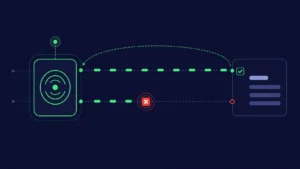
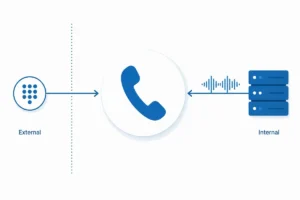
However, many organizations still confuse observability with traditional monitoring. In reality, a complete strategy often requires both internal telemetry and external validation.

For example, distributed tracing can reveal service dependencies inside your infrastructure, but it does not always confirm how your API performs from the outside world. That is why mature observability strategies often incorporate dedicated solutions like API monitoring, which continuously test availability, response time, endpoint behavior, and error handling from global locations.

If you are evaluating observability platforms, it helps to first understand what API monitoring really is and how it complements internal observability tooling.

What Is API Observability?

API observability is the ability to understand the internal state, performance, and behavior of an API by analyzing the data it produces. Instead of relying only on predefined alerts, observability allows teams to explore telemetry data and investigate unexpected issues in real time.

At its core, API observability is built on three foundational signals:

  • Logs capture detailed records of API requests and responses, including headers, payloads, status codes, and timestamps.
  • Metrics provide numerical measurements such as response time, throughput, latency, error rate, and availability.
  • Traces follow a request across multiple services, showing how it moves through microservices, databases, and third party integrations.

When correlated properly, these signals help answer deeper operational questions:

  • Why did this API call slow down?
  • Which downstream dependency caused the failure?
  • Is latency increasing for a specific region or endpoint?
  • Are error rates tied to a recent deployment?

In distributed and cloud native environments, APIs rarely operate in isolation. They depend on container orchestration platforms, service meshes, and third party services. Observability tools surface these relationships so teams can reduce mean time to detection and resolution.

However, observability alone does not guarantee reliability. It must be paired with continuous measurement of critical indicators such as uptime, endpoint responsiveness, and availability. Monitoring availability at the API layer ensures that services remain accessible and stable across environments. For a deeper look at this layer of visibility, see API availability monitoring and how it complements internal telemetry.

It is also important to track timing metrics carefully. Even if error rates remain low, latency spikes can degrade user experience. Understanding how response time trends impact performance is central to effective observability. Learn more about API response time monitoring and how it supports performance optimization.

In short, API observability provides depth. API monitoring ensures consistency. Together, they create a resilient and reliable API strategy.

API Observability vs API Monitoring vs APM

One of the biggest sources of confusion in modern DevOps environments is the difference between API observability, API monitoring, and Application Performance Monitoring. While these concepts overlap, they serve distinct purposes.

Understanding the differences helps teams build a complete visibility strategy instead of relying on a single tool category.

API Monitoring

API monitoring focuses on measuring predefined performance indicators and validating expected behavior. It answers practical operational questions such as whether an endpoint is available, how fast it responds, and whether error rates are increasing.

Monitoring typically includes uptime checks, endpoint validation, synthetic testing, and configurable real-time alerting based on defined monitoring rules. For example, API endpoint monitoring ensures that specific routes return the correct status codes and expected payloads. Similarly, API latency monitoring helps identify network slowdowns or regional performance degradation.

Monitoring is structured and proactive. It confirms that APIs function as expected under defined conditions.

Application Performance Monitoring

APM platforms provide deep visibility into application internals. They focus on code level diagnostics, dependency mapping, database performance, and distributed tracing across services.

APM is primarily inward facing. It helps engineers understand how components interact and where performance bottlenecks originate. However, it may not always validate real world availability from outside your infrastructure.

API Observability

API observability operates at a broader level. It enables exploratory analysis across logs, metrics, and traces to investigate complex or unexpected issues. Instead of only answering predefined questions, it allows teams to explore new ones.

For example, observability can help determine why latency increases only in one region or which microservice dependency is triggering cascading failures.

Why You Need Both

Monitoring tells you when something breaks. Observability helps you understand why.

A resilient API strategy combines continuous uptime validation, performance tracking, and deep trace analysis. When these layers work together, teams reduce mean time to detection and resolution while improving reliability and user experience.

Why API Observability Is Critical in Microservices and Cloud Native Architectures

Modern applications rarely run as monoliths. Instead, they operate as distributed systems composed of microservices, containers, serverless functions, and third-party integrations. In these environments, APIs act as the communication layer between services. That layer must remain reliable, performant, and transparent.

In a microservices architecture, a single user request can trigger dozens of internal API calls. If one dependency slows down or fails, the impact can cascade across the system. Without strong observability, diagnosing these issues becomes time-consuming and reactive.

API observability becomes critical in cloud native systems for several reasons.

First, service sprawl increases complexity. As organizations adopt Kubernetes and container orchestration, the number of service-to-service API calls grows rapidly. Observability tools help map dependencies and surface bottlenecks before they escalate.

Second, third-party APIs introduce external risk. Even if your internal services are healthy, a downstream provider may experience latency spikes or outages. Continuous external validation through API status monitoring ensures you detect these disruptions early and protect user experience.

Third, performance variability is common in distributed environments. Network conditions, regional routing, and scaling events can all affect response times. Tracking latency trends through API response time monitoring helps teams identify performance degradation patterns and maintain service level objectives.

Fourth, cloud environments scale dynamically. Auto scaling events, container restarts, and deployment rollouts can introduce transient issues that traditional static monitoring may miss. Observability platforms allow teams to correlate deployments with performance metrics and trace anomalies more effectively.

Ultimately, cloud native architecture increases both flexibility and operational risk. Observability reduces that risk by providing context. Monitoring ensures consistency. When combined, they create a strategy that supports:

  • Faster root cause analysis
  • Reduced mean time to resolution
  • Stronger reliability across regions
  • Better user experience

In distributed systems, visibility is not optional. It is foundational.

Core Capabilities to Look for in API Observability Tools

Not all API observability tools provide the same level of depth or coverage. Some focus heavily on tracing. Others prioritize analytics. The right platform depends on your architecture, traffic scale, and operational maturity.

When evaluating API observability tools, focus on the following core capabilities.

Distributed Tracing and Dependency Mapping

In microservices environments, tracing is essential. A strong platform should track requests across services and visualize how APIs interact with databases, queues, and third party endpoints. Service maps and trace timelines help teams identify bottlenecks and isolate failure points quickly.

Without tracing, debugging distributed systems becomes guesswork.

Log Correlation and High Cardinality Metrics

Logs provide granular request level details. Metrics reveal patterns and trends over time. The real value comes from correlating them.

Modern API observability tools must handle high cardinality data such as user IDs, endpoints, regions, and deployment versions without losing performance. This enables teams to drill into specific cohorts or edge cases instead of relying on aggregated averages.

Real Time Performance Monitoring

Latency and response time directly affect user experience. Observability platforms should track performance trends continuously, not just during incidents.

Monitoring network delays separately from server processing time allows teams to identify whether issues originate within application code or external infrastructure. If you are optimizing API performance, understanding response time trends across regions is critical. Reviewing how teams approach performance tracking in API latency and response monitoring strategies can help clarify best practices.

Synthetic Monitoring and External Validation

Internal telemetry shows how APIs behave inside your environment. Synthetic monitoring validates how they behave from the outside world.

External checks simulate real API requests from global locations to verify availability, correctness, authentication flows, and payload validation. This layer is essential for detecting DNS issues, routing problems, certificate errors, and regional outages that internal metrics may not reveal.

For organizations that need continuous external validation, platforms designed specifically for synthetic API testing can complement observability stacks. For example, dedicated solutions such as API monitoring from Dotcom-Monitor provide multi-step REST and SOAP testing, global monitoring locations, detailed reporting, and configurable alerting and detailed reporting.

OpenTelemetry Compatibility

OpenTelemetry has become the industry standard for vendor neutral instrumentation. Observability tools should support OpenTelemetry data ingestion and correlation.

This flexibility prevents vendor lock in and allows organizations to instrument once while exporting telemetry to multiple backends.

Alerting and Anomaly Detection

Finally, tools must move beyond static thresholds. Intelligent alerting that reduces noise while highlighting meaningful anomalies improves response time and prevents alert fatigue.

A mature observability platform balances visibility with clarity.

Example Observability Dashboard Metrics

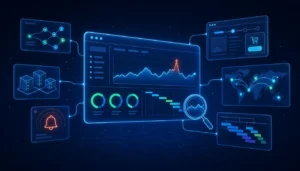
A well-designed observability dashboard typically includes several key indicators for API performance.

Common dashboard panels include:

Metric Purpose
Request throughput Tracks API traffic volume
Error rate Identifies reliability issues
Latency percentiles (P50, P95, P99) Measures user experience performance
Dependency latency Identifies slow downstream services
Regional response time Detects geographic performance issues

Dashboards allow teams to monitor system health at a glance while drilling down into anomalies when incidents occur.

Categories of API Observability Tools

The term “API observability tools” covers a wide range of platforms. Some focus on full stack telemetry. Others specialize in API analytics or external uptime validation. Understanding these categories helps teams choose tools that align with their architecture and operational goals.

API Observability Stack Comparison

Different observability approaches solve different parts of the API visibility problem. The following matrix compares the most common tool categories used in modern DevOps environments.

Approach Primary Data Sources Best For Strengths Limitations
Synthetic API Monitoring External API requests Uptime validation and availability testing Independent validation, global monitoring locations Limited internal diagnostics
Full Stack Observability Logs, metrics, traces Diagnosing complex distributed systems Deep root cause analysis Often inward-focused
API Analytics Platforms API traffic and usage data Product analytics and API governance Usage insights and customer behavior tracking Limited infrastructure monitoring
Open Source Observability Stacks Custom telemetry pipelines Organizations requiring vendor neutrality Flexibility and control Operational complexity
Cloud Native Monitoring Cloud provider telemetry Platform-specific workloads Native integrations and automation Limited cross-cloud visibility

This framework helps teams identify which observability approach aligns best with their infrastructure and operational goals.

1. External Synthetic API Monitoring Platforms

Finally, there are platforms designed specifically for validating API availability and performance from outside your infrastructure.

These tools simulate real world API requests across global checkpoints to verify uptime, latency, authentication flows, and response integrity. For organizations that require independent verification of API health, dedicated platforms such as Dotcom-Monitor’s API monitoring solution provide continuous REST and SOAP validation, detailed reporting, and alerting that integrates with DevOps pipelines.

This external layer strengthens any observability stack by ensuring that what looks healthy internally is truly accessible to users globally.

2. Full Stack Observability Platforms

These platforms provide broad visibility across infrastructure, applications, logs, metrics, and traces. They are typically used by enterprises operating complex distributed systems.

Examples include:

  • Datadog;
  • New Relic;
  • Dynatrace;
  • Splunk.

Strengths:

  • Deep distributed tracing;
  • Infrastructure visibility;
  • Advanced analytics.

Limitations:

  • Can be complex and costly at scale
  • Often inward focused

These tools excel at root cause analysis inside your environment but may require complementary solutions for external validation.

3. API Focused Observability Platforms

These platforms prioritize API traffic analytics, usage insights, and governance features.

Examples include:

  • Moesif
  • Treblle

Strengths:

  • Detailed API usage analytics
  • User behavior tracking
  • API governance insights

Limitations:

  • May not provide full infrastructure visibility
  • Often centered on analytics rather than uptime validation

These tools are particularly useful for product teams managing API monetization and lifecycle visibility.

4. Open Source Observability Stacks

Many engineering teams build custom observability stacks using open source components.

Common technologies include:

  • Prometheus
  • Grafana
  • Jaeger
  • OpenTelemetry

Strengths:

  • High flexibility
  • Vendor neutrality
  • Cost control

Limitations:

  • Requires operational expertise
  • Maintenance overhead
  • Integration complexity

Open source stacks are powerful but demand engineering investment.

5. Cloud Native Monitoring Tools

Cloud providers offer built in monitoring capabilities for their ecosystems.

A common example is Amazon CloudWatch, which provides metrics, logs, and tracing for AWS workloads.

These tools integrate seamlessly with their respective platforms but may offer limited cross cloud visibility.

Best API Observability Tools in 2026

The following matrix compares several widely used API observability platforms across common evaluation criteria. This overview helps engineering teams quickly understand how different tools fit into a modern observability stack.


Tool Category Logs Metrics Tracing Synthetic Monitoring OpenTelemetry Support Best Fit
Dotcom-Monitor External synthetic monitoring Limited Limited Partial External API validation
Datadog Full-stack observability Cloud-scale DevOps
New Relic APM / observability platform Application diagnostics
Dynatrace AI-driven observability Enterprise environments
Splunk Log analytics / observability Limited Data-intensive systems
Moesif API analytics platform Limited Limited API product teams
Treblle API monitoring & analytics Limited Limited Developer-focused analytics

Category 1: External Synthetic API Monitoring Platforms

External synthetic monitoring plays a critical role in a complete API observability strategy. While internal telemetry tools focus on logs, metrics, and traces within your infrastructure, synthetic monitoring validates how APIs behave from outside your environment.

This ensures real-world availability, correct responses, authentication reliability, and performance across global regions.

1. Dotcom-Monitor

Dotcom-Monitor specializes in external API and web performance monitoring. Its API monitoring solution focuses on validating uptime, performance, and functional correctness through scheduled synthetic checks.

Key strengths include:

  • Multi-step REST and SOAP API monitoring
  • Support for authentication methods and custom headers
  • Global monitoring locations for regional validation
  • Detailed response time metrics and performance reporting
  • Configurable alerting and reporting

Dotcom-Monitor allows teams to simulate real API calls, validate response codes, inspect payload content, and track availability over time. This is particularly important when monitoring customer-facing APIs, partner integrations, or third-party endpoints.

For organizations looking to strengthen their external visibility layer, Dotcom-Monitor’s API monitoring platform provides structured testing, detailed performance reports, and global validation that complements internal observability stacks.

It is especially well-suited for:

  • SLA validation
  • Uptime verification
  • Regional performance tracking
  • Continuous endpoint testing

Because it operates independently from your infrastructure, it can detect issues such as network or infrastructure-related accessibility issues and regional outages that internal tracing tools may not surface.

2. Checkly

Checkly focuses on API and browser synthetic monitoring. It supports scripted checks and automated testing to validate API reliability.

Strengths:

  • Automated API checks
  • CI/CD integrations
  • Developer-friendly setup

Limitations:

  • Primarily synthetic focused
  • Less emphasis on deep analytics

3. SmartBear (AlertSite)

SmartBear’s AlertSite provides synthetic monitoring for APIs and web transactions. It supports functional validation and uptime checks.

Strengths:

  • Synthetic API validation
  • Global monitoring points
  • Alerting integrations

Limitations:

  • Synthetic focused rather than full observability

External synthetic monitoring is not a replacement for distributed tracing. It is a validation layer. When paired with internal observability tools, it ensures APIs are not only functioning internally but also accessible and performant for real users.

Category 2: Full Stack Observability Platforms

Full stack observability platforms provide broad visibility across infrastructure, applications, logs, metrics, and traces. These tools are typically used by organizations operating complex distributed systems that require deep internal diagnostics.

While they are often marketed as complete observability solutions, they primarily focus on internal telemetry rather than independent external validation.

1. Datadog

Datadog is a widely adopted SaaS observability platform designed for cloud scale environments. It provides monitoring across infrastructure, APM, logs, security signals, and user experience monitoring.

Key strengths:

  • Distributed tracing and service maps
  • Extensive third party integrations
  • Real time dashboards and alerting

Datadog is well suited for DevOps and SRE teams managing dynamic cloud environments. However, external uptime validation may require complementary synthetic monitoring tools.

2. New Relic

New Relic began as an APM solution and has expanded into full stack observability. It offers code level diagnostics, distributed tracing, infrastructure monitoring, and digital experience tracking.

Strengths:

  • Deep application performance insights
  • End to end tracing
  • Real user monitoring

New Relic is particularly strong in identifying code level bottlenecks, though organizations often combine it with external API validation for complete visibility.

3. Dynatrace

Dynatrace provides automated full stack monitoring with AI assisted analysis. Its OneAgent technology automatically instruments environments to provide visibility across applications and infrastructure.

Strengths:

  • Automated topology discovery
  • AI driven anomaly detection
  • Enterprise scale visibility

Dynatrace is commonly used in large enterprise environments that prioritize automation and AI driven root cause analysis.

4. Splunk

Splunk is known for log analytics and data indexing, and it has expanded into observability through Splunk Observability Cloud.

Strengths:

  • Powerful log search capabilities
  • Full fidelity tracing
  • Integration with security analytics

Splunk is often selected by enterprises that require strong correlation between operational data and security insights.

Full stack observability platforms provide deep internal insight. However, they are most effective when paired with external validation tools that continuously test API availability and performance from outside your infrastructure.

Category 3: API Focused Observability Platforms

API focused observability platforms concentrate specifically on API traffic, usage analytics, and governance rather than full infrastructure monitoring. These tools are often used by API product teams, platform teams, and organizations managing public or partner APIs.

They typically provide deeper visibility into how APIs are consumed, who is using them, and how performance trends affect business outcomes.

1. Moesif

Moesif is an API analytics and observability platform designed to provide insight into API usage patterns and customer behavior.

Key strengths:

  • Detailed API traffic analytics
  • User behavior tracking
  • Business level metrics tied to API usage
  • Custom dashboards and filtering

Moesif is particularly useful for API product teams that need to understand adoption, monetization, and user segmentation. Its strength lies in analytics and governance rather than infrastructure wide tracing.

2. Treblle

Treblle focuses on real time API monitoring and logging with a developer friendly interface. It provides request level visibility and analytics designed to simplify debugging and usage analysis.

Key strengths:

  • Real time request logging
  • Error categorization
  • Usage analytics dashboards
  • Integrations with development workflows

Treblle is well suited for teams seeking quick setup and streamlined API visibility without deploying a full observability stack.

API focused observability tools provide meaningful insights into API behavior and consumption patterns. However, they often prioritize analytics over deep infrastructure tracing or independent external validation.

For organizations operating customer facing APIs, combining API analytics with continuous uptime validation ensures both visibility and reliability. Analytics reveal how APIs are used. External monitoring confirms that endpoints remain available and performant under real world conditions.

When layered correctly with tracing and synthetic validation, API focused platforms become part of a broader observability ecosystem rather than a standalone solution.

Perfect. Now we move into open source stacks, which are very common in DevOps-heavy environments.

Category 4: Open Source Observability Stacks

Many engineering teams build their own observability pipelines using open source tools. This approach offers flexibility and vendor neutrality, but it requires operational expertise and ongoing maintenance.

Open source stacks are often chosen by organizations that want full control over data storage, instrumentation, and integrations.

1. Prometheus

Prometheus is widely used for metrics collection and alerting, especially in Kubernetes environments. It specializes in time series data and supports powerful querying through PromQL.

Strengths:

  • Strong Kubernetes integration
  • Flexible metric collection
  • Custom alerting rules

Limitations:

  • Focused primarily on metrics
  • Requires additional tools for logs and traces

2. Grafana

Grafana is commonly used alongside Prometheus for dashboards and visualization. It supports multiple data sources and allows teams to build highly customizable monitoring interfaces.

Strengths:

  • Flexible dashboards
  • Broad data source support
  • Large plugin ecosystem

Grafana itself does not collect telemetry but serves as a visualization layer.

3. Jaeger

Jaeger is an open source distributed tracing system designed for microservices architectures. It allows teams to visualize request flows and identify latency bottlenecks across services.

Strengths:

  • End to end trace visualization
  • Microservices friendly
  • CNCF backed project

Jaeger focuses on tracing and must be combined with other tools for full observability coverage.

4. OpenTelemetry

OpenTelemetry is not a monitoring platform but an instrumentation framework. It standardizes how telemetry data is generated and exported.

Strengths:

  • Vendor neutral instrumentation
  • Broad language support
  • Interoperability across observability tools

Open source observability stacks offer flexibility and cost control. However, they introduce operational complexity. Teams must manage scaling, storage, upgrades, and integrations themselves.

For organizations that rely heavily on internal telemetry through open source stacks, adding external API validation provides an additional reliability layer. Synthetic checks confirm that APIs are reachable and performing as expected beyond the internal cluster environment.

How to Choose the Right API Observability Tool

Choosing the right API observability tool depends on your architecture, team maturity, and operational goals. There is no single platform that solves every visibility challenge. Instead, most organizations combine tools across categories to build a layered strategy.

Here are the key factors to evaluate.

1. Architecture Complexity

If you operate a simple monolithic application with a few internal APIs, lightweight monitoring may be sufficient. However, distributed microservices, Kubernetes environments, and hybrid cloud deployments require deeper tracing and dependency mapping.

Assess:

  • Number of services and endpoints
  • Third party API dependencies
  • Regional traffic distribution
  • Deployment frequency

Complex environments benefit from both internal observability and external uptime validation.

2. Internal vs External Visibility Needs

Internal observability tools focus on logs, metrics, and traces within your infrastructure. They help answer why something failed.

External monitoring confirms whether your APIs are accessible and performant from the outside world.

For customer-facing or partner APIs, relying only on internal metrics can create blind spots. Independent validation ensures endpoints respond correctly across regions and networks. Organizations that require SLA verification or uptime reporting often strengthen their stack with dedicated solutions such as Dotcom-Monitor’s API monitoring software to continuously test availability, response integrity, and performance.

3. OpenTelemetry Strategy

If vendor neutrality is important, ensure the observability tool supports OpenTelemetry ingestion. Instrumenting once and exporting telemetry to multiple backends prevents lock-in and supports long term flexibility.

OpenTelemetry compatibility is particularly valuable in multi-tool environments.

4. Alerting and Noise Reduction

High signal to noise ratio is critical. Look for tools that support configurable alert rules and meaningful notifications. Excessive alerts reduce operational efficiency.

Clear, actionable notifications improve response times and reduce fatigue.

5. Scalability and Cost Model

Observability costs can increase quickly as data volume grows. Understand whether pricing is based on:

  • Data ingestion
  • Storage retention
  • Hosts or services
  • API checks

External synthetic monitoring typically scales predictably based on check frequency and endpoints, which can simplify cost forecasting for uptime validation.

The most resilient API strategies do not rely on a single tool. They combine tracing for internal diagnostics, analytics for usage insights, and synthetic validation for real world reliability.

Implementation Best Practices for API Observability

Selecting the right API observability tools is only part of the equation. Effective implementation determines whether your visibility strategy delivers real operational value.

The following best practices help teams build a resilient API observability framework.

1. Instrument Early and Consistently

Observability should be integrated into development workflows, not added after production issues occur. Instrument APIs during development using standardized telemetry frameworks such as OpenTelemetry.

Consistent instrumentation ensures logs, metrics, and traces are structured correctly across services.

Example: Instrumenting an API with OpenTelemetry

OpenTelemetry provides vendor-neutral instrumentation that allows APIs to export telemetry data to observability platforms.

Example Node.js instrumentation:

const { NodeSDK } = require('@opentelemetry/sdk-node');
const { getNodeAutoInstrumentations } = require('@opentelemetry/auto-instrumentations-node');

const sdk = new NodeSDK({
instrumentations: [getNodeAutoInstrumentations()] });

sdk.start();

This configuration automatically captures request traces, latency metrics, and error information for API endpoints. The telemetry can then be exported to observability platforms such as Datadog, Dynatrace, or open-source collectors.

Instrumenting APIs early in development ensures that observability signals are available when incidents occur.

2. Define Clear SLIs and SLOs

Service Level Indicators and Service Level Objectives provide measurable targets for API performance and reliability. Instead of reacting to arbitrary thresholds, define:

  • Acceptable response time ranges
  • Maximum error rate percentages
  • Uptime targets for critical endpoints

Monitoring these indicators continuously supports measurable tracking of uptime and performance objectives.

For example, tracking endpoint uptime and response behavior through structured monitoring approaches such as API endpoint availability testing helps maintain measurable reliability standards.

3. Combine Internal Telemetry with External Validation

Internal metrics may show healthy services even when users experience issues. Network routing errors, DNS misconfigurations, SSL certificate failures, or regional connectivity problems can impact availability without triggering internal alarms.

Adding external validation strengthens reliability. If your team needs guidance on configuring structured API checks, resources like REST Web API monitoring setup documentation provide step-by-step instructions for implementing consistent synthetic validation.

Combining tracing with independent uptime checks ensures APIs are functioning correctly from both inside and outside your infrastructure.

Observability is not only about incident response. Historical data helps teams identify gradual performance degradation, capacity issues, or scaling inefficiencies.

Tracking response time patterns, error rate spikes, and regional latency trends enables proactive optimization instead of reactive troubleshooting.

5. Continuously Refine Alerts

Alert configurations should evolve with system maturity. Periodically review thresholds, escalation paths, and notification channels to reduce noise and improve signal quality.

Effective API observability is iterative. It improves as your architecture evolves.

Frequently Asked Questions About API Observability Tools

What is the difference between API observability and API monitoring?
API observability focuses on understanding why an issue occurs by analyzing logs, metrics, and traces, while API monitoring focuses on continuously checking availability, performance, and error rates against predefined thresholds. Monitoring detects problems, and observability helps diagnose them.
Do I need both OpenTelemetry and synthetic monitoring?
OpenTelemetry helps standardize how telemetry data is collected inside your infrastructure, but it does not validate how your API behaves from external user locations. Synthetic monitoring complements OpenTelemetry by independently verifying uptime, response integrity, and regional performance.
What are the best API observability tools for microservices?
The best tools depend on your architecture. Full stack platforms such as Datadog, Dynatrace, and New Relic are commonly used for distributed tracing, while external platforms like Dotcom-Monitor provide independent validation of API uptime and latency.
Can API observability improve API security?
Yes. Observability tools can surface abnormal traffic patterns, error spikes, or unexpected usage behavior that may indicate misuse or attacks. While observability is not a replacement for dedicated security tools, it strengthens visibility and early detection.
How do I effectively monitor third party APIs?
Third party APIs should be monitored independently from your internal systems. External synthetic checks validate response codes, payload integrity, authentication flows, and regional accessibility. This ensures you detect outages or latency issues even if the provider does not notify you.
Is API observability necessary for small teams?
Even small teams benefit from structured API monitoring and observability because downtime and performance issues directly impact user trust. Starting with clear uptime validation and performance tracking provides a scalable foundation as systems grow.

Latest Web Performance Articles​

Start Dotcom-Monitor for free today​

No Credit Card Required