IPv6 Requires a New Approach to Website Monitoring

From IPv4 to IPv6

IPv6 Monitoring

IPv6 Requires a New Approach to Website Monitoring

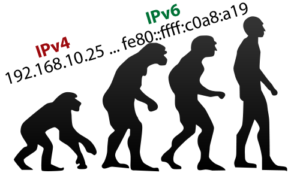
It was expected that the Internet Protocol used for website addresses and routing traffic, known as Internet Protocol version 4 (IPv4), wouldn’t be able to handle the growing number of websites forever. Eventually the number of websites would exceed IPv4’s 32-bit capability of 4.3 billion addresses.

While there has been tremendous delay in dealing with this issue, eventually the Internet Engineering Task Force introduced IPv6, with its first official use for the 2008 Olympics. IPv6’s 128 bit addressing scheme allows for 3.4×1038 addresses. That’s 38 zeros at the end; exponentially more than the 9 digits expressed by the word billion.

Read more…


IPv6 Performance Monitoring: An External View on June 8, IPv6 Day

World IPv6 Day launchExternal Monitoring for IPv6-Enabled Services

As highlighted by the upcoming IPv6 Day on June 8, the need for a new Internet Protocol (IP) is well understood and accepted in the networking industry.

Requirements for more address space, simpler address design and handling at the IP layer, better Quality of Service (QoS) support, greater security, and an increasing number of media types and Internet-capable devices have all contributed to drive the development of Internet Protocol version 6 (IPv6).

What is less well understood certainly are aspects of how external monitoring helps identify key challenges for businesses using IPv6, specific areas for IPv6 performance monitoring, and the benefits of external IPv6 performance monitoring. Firstly, for brevity sake some of the basic aspects of IPv6-related monitoring are noted in the grid below. After the grid is a longer, detailed note on aspects of IPv6 as related to external monitoring.

Read more…


IPv6 Monitoring | IPv6 Performance, Network & Security Monitoring

IPv6 MonitoringThe switch to IPv6 is jumping to light speed.  On June 8, 2011 several large organizations, including Google, Yahoo, and Facebook will run a comprehensive test for switching to IPv6. If all goes well most companies will start making the switch. However, the advent of IPV6 is not without problems and the performance monitoring solutions that worked for IPv4, will not work with IPv6.

Read more…


Dotcom-Monitor Launches IPv6 Web Performance Monitoring

Dotcom-Monitor Announces New IPv6 Web Performance Monitoring

IPv6 performance monitoring

Dotcom-Monitor has added IPv6 monitoring to its external web performance monitoring services

Printable PDF Version

Minneapolis, Sept. 8, 2008 – Dotcom-Monitor announced today that it is adding Internet Protocol version 6 (IPv6) monitoring to its external web-performance monitoring services. Using Dotcom-Monitor, companies and organizations deploying IPv6-enabled websites can now monitor website accessibility, availability and performance from an external user’s perspective.

“IPv6 is the future of the Internet, and performance monitoring will be even more critical as a far greater number of devices are connected,” said Vadim Mazo, founder and chief technical officer of Dotcom-Monitor. “Increasingly, more companies and organizations are making the switch to IPv6, and our monitoring service helps ensure that Ipv6-enabled websites and web applications are performing as expected.”

Read more…